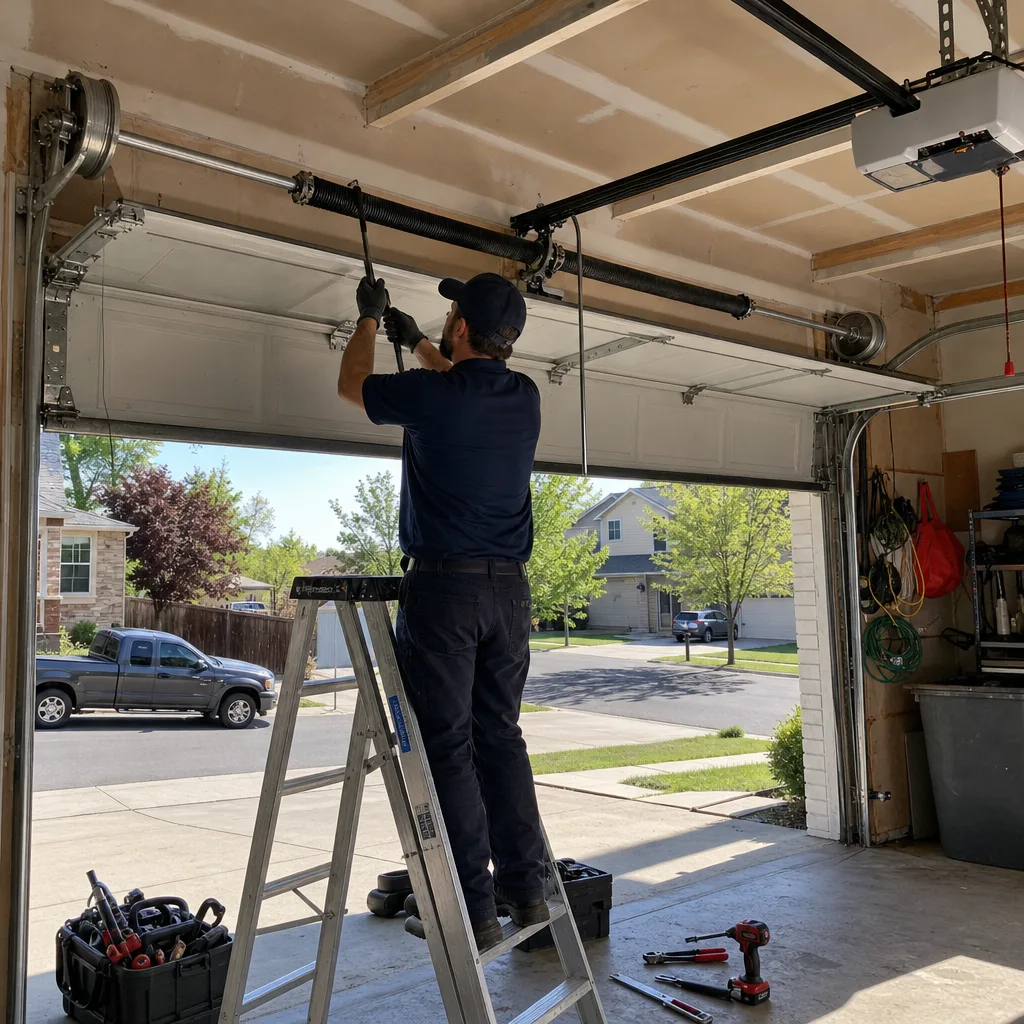
Last updated November 23, 2026
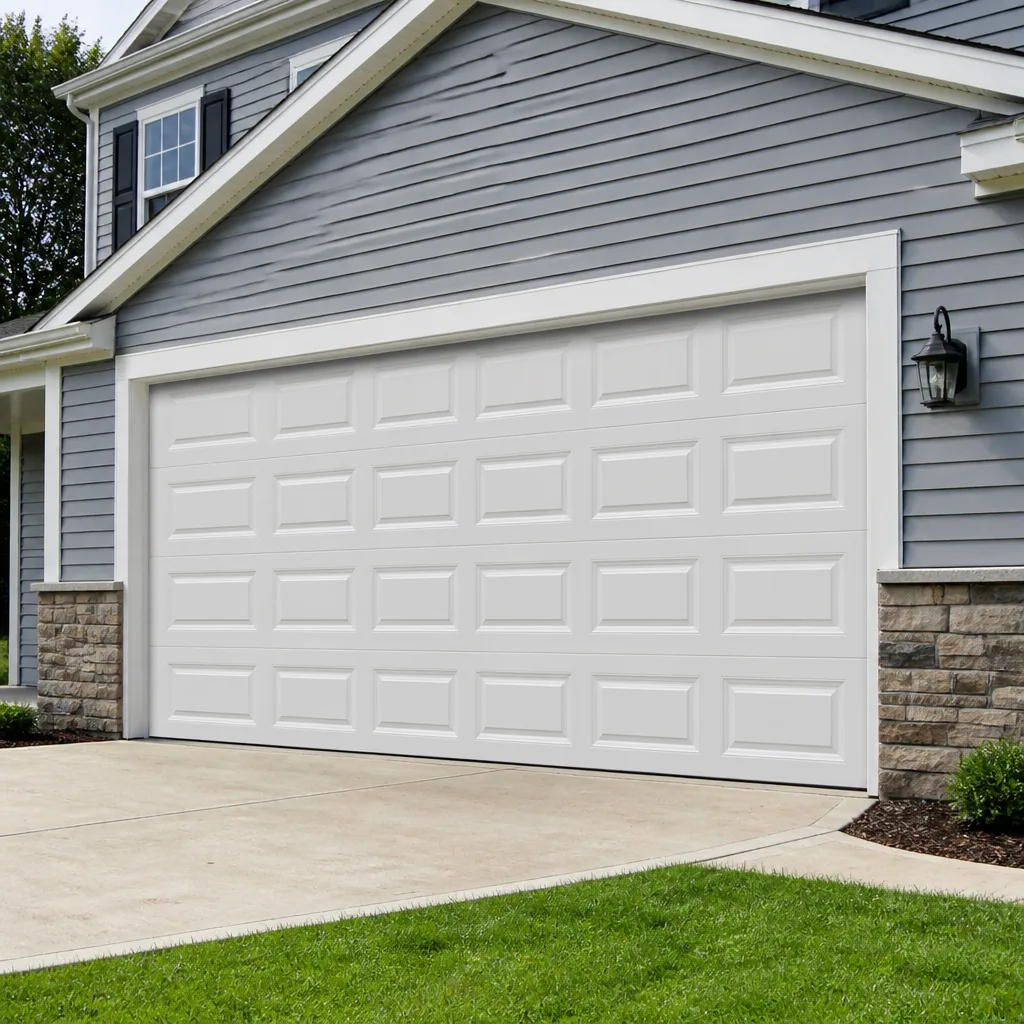 Raised-panel steel
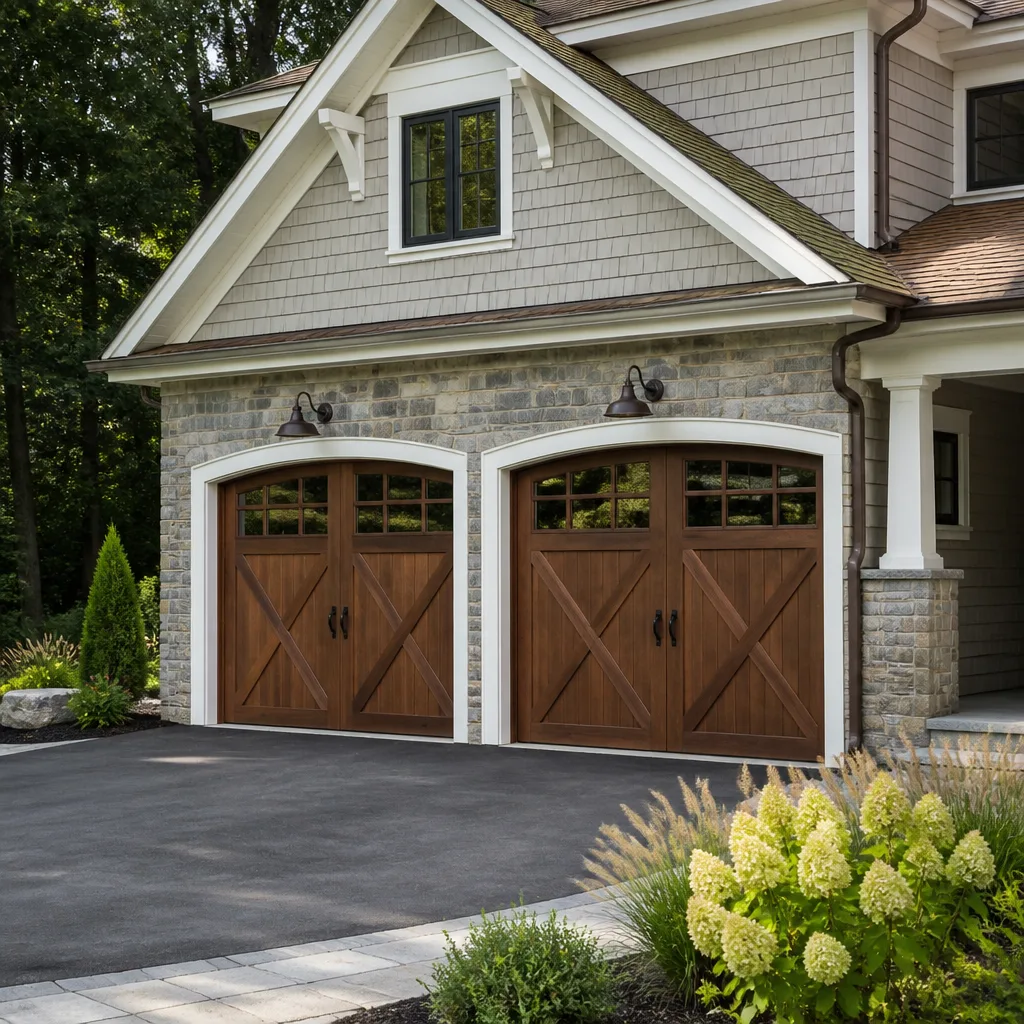 Carriage house
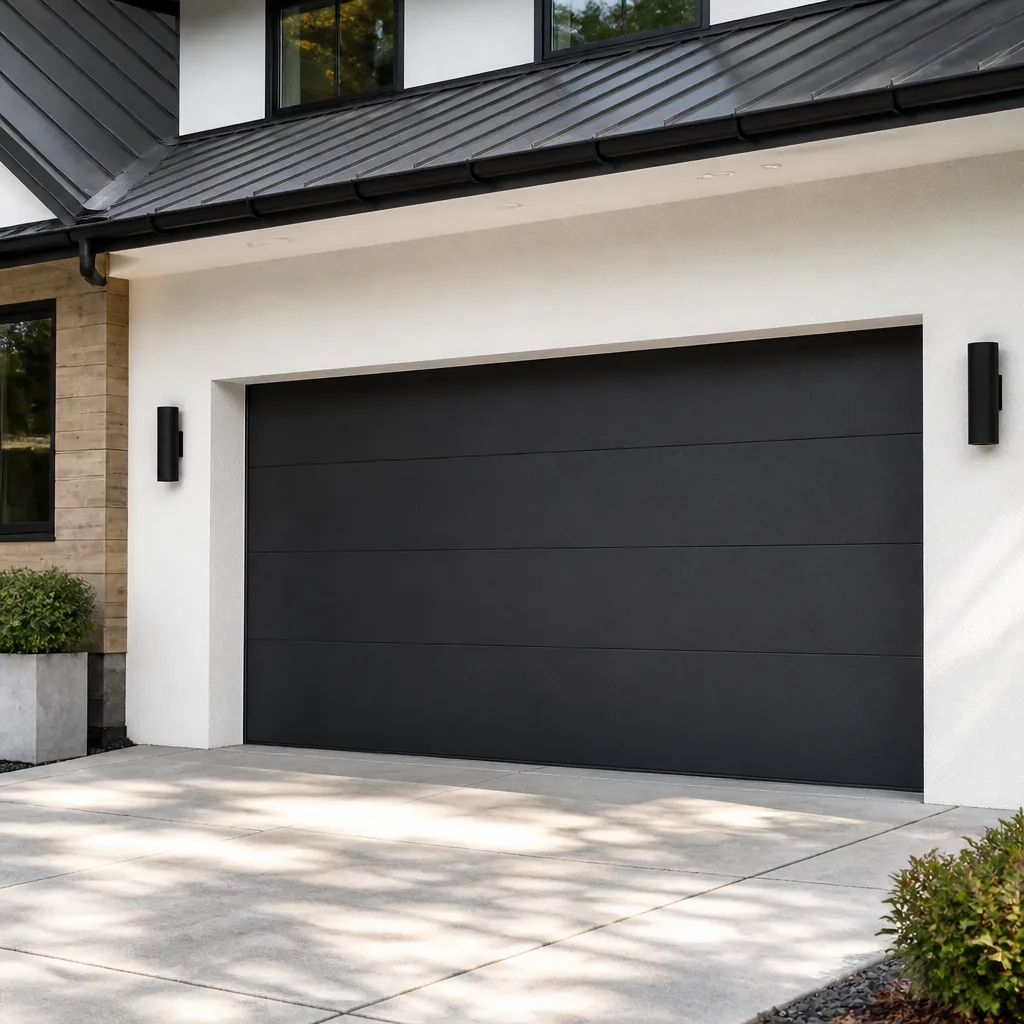 Modern flush
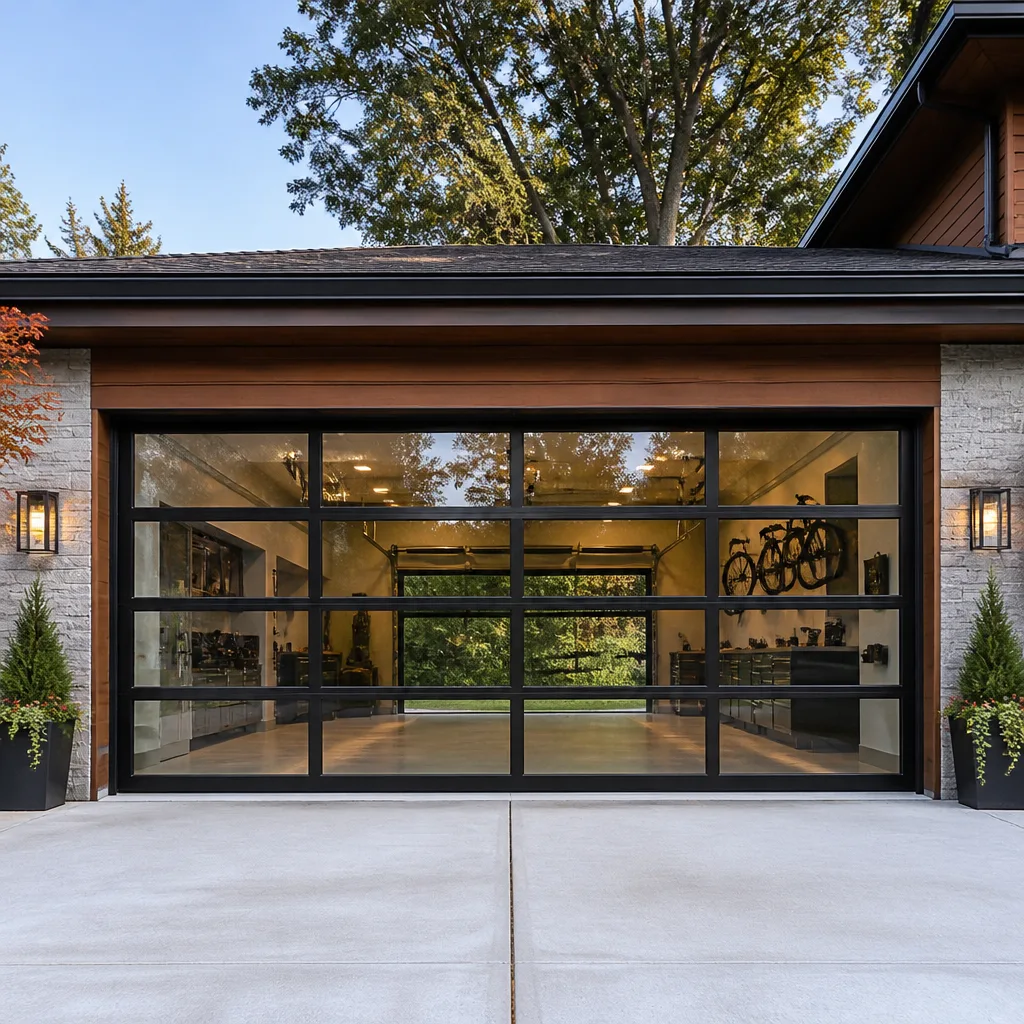 Full-view glass
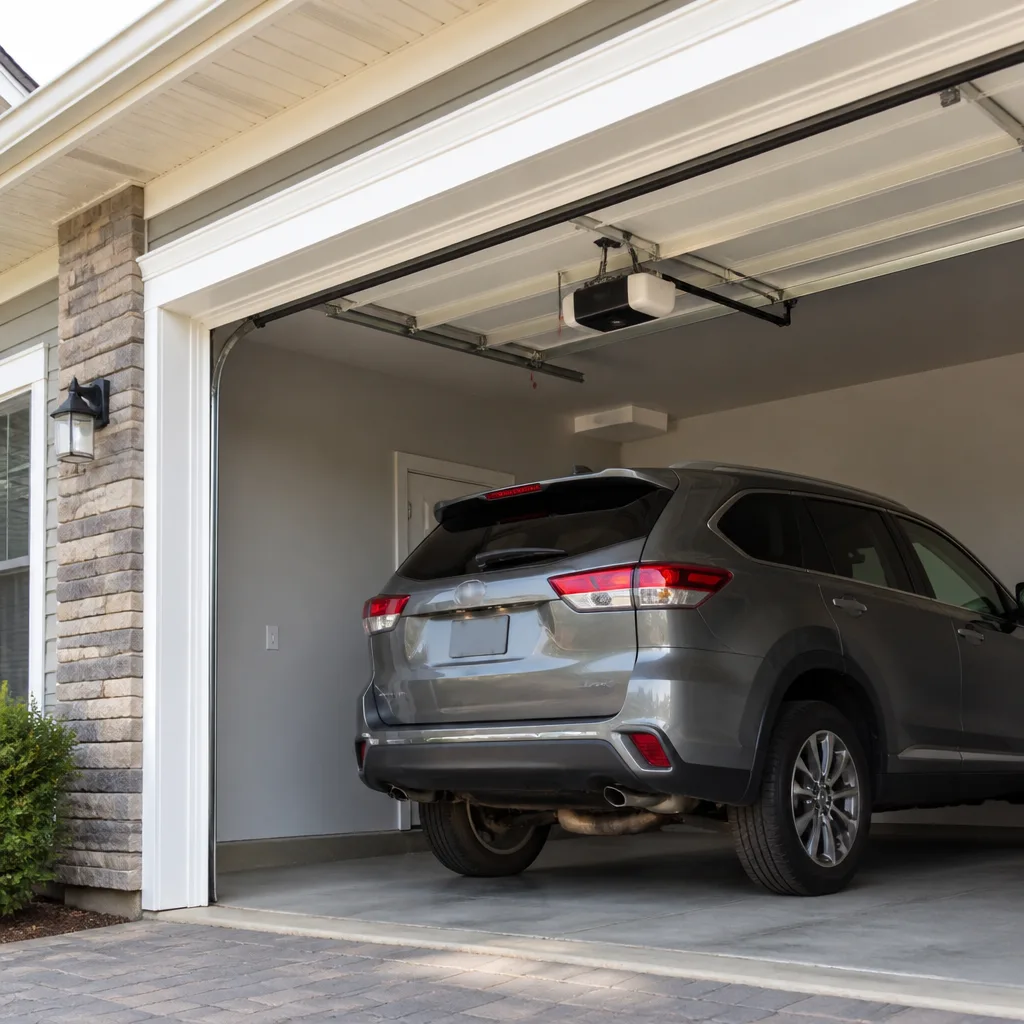 LiftMaster openers
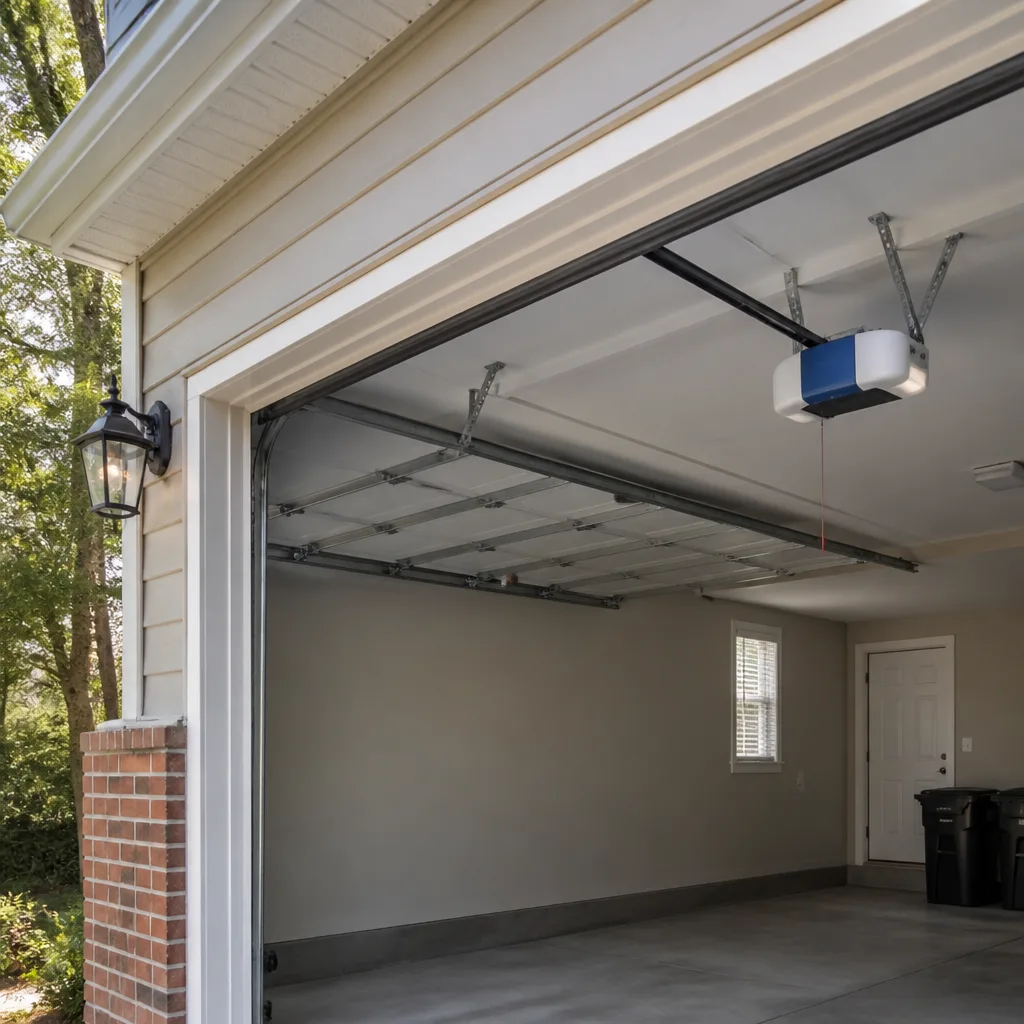 Chamberlain openers
Full 25-point door and opener safety check with every visit - springs, cables, rollers, tracks, and your LiftMaster or Chamberlain opener included
You get a price before we start. It does not change when the pro arrives.
Get your free estimateThe Complete Guide to Garage Doors in Arvada
Most garage door advice online was written for new construction. Arvada isn’t new construction. A large share of homes here went up between 1960 and 1995, which means the framing, header heights, and spring setups in thousands of garages around this city were built to standards that predate today’s openers and today’s panel sizes. Following a national guide on a 1970s Arvada door is how homeowners end up with the wrong spring, a panel that doesn’t fit, or an opener that fights the door instead of lifting it. This guide treats Arvada as the variable: the freeze-thaw cycles along the Front Range, the tract-home dimensions in neighborhoods like Ralston Valley, Allendale, and Lake Arbor, and the HOA rules that shape what you’re allowed to put on the front of your house.
Quick Answer
A garage door in Arvada needs three things to work reliably: a spring system matched to the door’s actual weight, a bottom seal that survives repeated freeze-thaw, and hardware sized for the header clearance your home was built with. Most failures we diagnose here trace back to one of those three being wrong rather than worn out. Get all three right and a door lasts far longer than the opener attached to it.
Styles & brands we work with
- Raised-panel steel
- Carriage house
- Modern flush
- Full-view glass
- LiftMaster openers
- Chamberlain openers
Table of Contents
- How Arvada’s Climate Affects Your Garage Door
- What Arvada’s Older Housing Stock Means for Your Garage
- Torsion and Extension Springs in Colorado Conditions
- Choosing an Opener for an Older Arvada Door
- HOA Rules for Garage Doors in Arvada Communities
- Single-Car vs. Double-Car Door Requirements
- How to Check Your Door’s Age Through Permit Records
- A Maintenance Routine That Fits Arvada Weather
How Arvada’s Climate Affects Your Garage Door
The Front Range does something to garage doors that coastal and southern guides never account for: it freezes and thaws repeatedly through late fall, winter, and early spring, often within the same week. Water gets into a worn bottom seal, freezes overnight, expands, and pries the rubber away from the door. Repeat that a hundred times over a season and a seal that looked fine in October is letting cold air and moisture into the garage by February. This cycle is the single biggest driver of premature garage door wear in Arvada, and it’s the reason we check the bottom seal on almost every service call.
Steel panels respond to the same cycle differently. Sun on a south-facing door can warm the steel well above ambient temperature, then the temperature drops twenty or thirty degrees overnight. That expansion and contraction stresses the seams between panels, the paint at the joints, and the hinges bolted through the steel. Over years, panels begin to warp slightly, and a door that used to close flush starts to show gaps at the top or sides.
What this means for you in practical terms:
- Inspect the bottom seal twice a year, once before the first hard freeze and once in early spring. Look for cracking, separation from the retainer, or a seal that no longer touches the floor.
- Watch panel seams for paint cracking or rust, especially on doors facing south or west where sun exposure is longest.
- Listen for a change in sound. A door that starts squealing or grinding in cold weather is telling you something about lubrication or roller condition before it becomes a repair.
- Keep the track clear of debris that freeze-thaw pushes around. Grit in the track wears rollers fast.
None of this is dramatic. It’s the ordinary wear pattern of a high-desert climate with real winters, and it rewards a little attention. A door that gets checked twice a year in Arvada typically outlasts one that gets checked when something breaks.
What Arvada’s Older Housing Stock Means for Your Garage
If your home was built between 1960 and 1995, which covers a large portion of Arvada, there’s a good chance your garage was framed to dimensions that don’t match what a modern door or opener expects. The most common issue is header clearance: the space between the top of the door opening and the ceiling of the garage. Older tract homes in neighborhoods like Allendale and Lake Arbor often have tighter clearance than today’s standard, because the original doors were shorter and the openers were simpler.
Header clearance matters because it determines what you can install:
- Low-clearance situations may rule out certain opener rail configurations and force a different mounting approach or a jackshaft-style opener mounted to the side of the torsion bar.
- Panel height options are limited by the rough opening. A standard 7-foot door in a home framed for a 6-foot-6 opening needs modification, not a bigger door.
- Torsion bar placement depends on how much room exists above the door and how the original framing ran the header.
- Track radius is chosen based on ceiling height and how far back the door needs to travel when open.
Ralston Valley homes from the 1980s and 1990s tend to have more generous clearance, often closer to modern standards, but not always. The only reliable way to know is to measure the actual opening, ceiling height, and header before ordering anything. That’s why a proper measure matters more than a catalog photo. When we quote a new door installation, the measurement comes first and the product choice follows it, not the other way around.
Older doors also tend to carry older hardware: rollers with worn nylon wheels, hinges that have been bent and rebent, and springs sized for the original door weight. If a previous owner replaced the door without re-sizing the springs, the whole system is out of balance, which is one of the most common things we find on an Arvada service call.
Torsion and Extension Springs in Colorado Conditions
Springs are what make a heavy garage door feel light enough to lift with one hand. They come in two basic types: torsion springs, mounted on a horizontal bar above the door and twisted to store energy, and extension springs, mounted along the horizontal tracks on each side and stretched to store energy. Which type you have depends on the door and the era of the home. Many older Arvada homes have extension springs; many newer or retrofitted doors use torsion.
Colorado’s temperature swings affect springs more than most homeowners realize. Steel loses and regains tension as temperature changes, and a spring that’s precisely calibrated in July may feel different in January. That’s normal. What isn’t normal is a spring that’s lost tension permanently, usually because the door has become heavier than the spring was sized to lift. A door that feels heavier every year, or an opener that strains more each season, is a sign the spring is undersized for the door or wearing out.
Springs are dangerous, and this is the one part of the guide where we’ll be blunt: leave them to a technician who does this daily. A torsion spring under tension stores enough energy to break bones or worse if it releases suddenly. Extension springs can whip through drywall if a safety cable fails. There is no version of spring work that’s safe for a homeowner without training and the right tools, and no online guide should walk you through it. If you suspect a spring problem, call a professional for garage door spring repair rather than attempting it yourself.
What you can do safely:
- Look at the springs and note their color. Torsion springs are color-coded by wire gauge and inside diameter, and that color is how a technician picks the right replacement.
- Note whether the door feels heavier than it used to when you lift it manually (with the opener disconnected, door fully closed).
- Listen for a loud bang from the garage, which often means a torsion spring has snapped.
- Never try to adjust, oil, or re-tension a spring. Lubricating the door’s hinges, rollers, and tracks is fine; touching the spring is not.
One spring replacement is priced separately from a matched pair. If your door has two torsion springs and one breaks, most technicians will recommend replacing both, because the surviving spring has usually taken the same wear. A pair costs roughly twice what a single spring costs, and the written estimate will spell out which you’re getting before anything is touched.
Choosing an Opener for an Older Arvada Door
The opener is the part of the system homeowners think about most, and it’s the part that matters least to how the door actually performs. An opener pulls a door that the springs have already balanced. If the door is heavy or out of balance, no opener will fix it; it’ll just wear out faster. That’s why we look at the door first and the opener second on almost every service call.
Modern openers come from a handful of major manufacturers, and the compatibility differences between them matter when something fails. We work on equipment from Chamberlain, Genie, LiftMaster, Craftsman, and others, and the parts and diagnostic approach differ by brand. A safety sensor fault on a Chamberlain isn’t the same problem as one on a Genie, and the fix isn’t always the same either.
Some practical guidance for choosing an opener on an older Arvada door:
- Match the opener’s lifting capacity to the door. A heavier insulated door needs a stronger opener than a basic steel panel door of the same size.
- Check the header clearance first. Low-clearance garages may need a different rail type or a side-mounted unit.
- Consider belt-drive if the garage is under a bedroom. Belt-drive openers are quieter than chain-drive, which matters in homes where the garage shares a wall or ceiling with living space.
- Keep the safety sensors in working order. They’re a code requirement for a reason, and they fail more often in cold weather.
- Don’t overspend on features you won’t use. A basic opener with a good remote and reliable sensors is more useful than a premium unit with an app nobody opens.
When an opener fails, the diagnostic path matters more than the brand name on the box. We offer garage door opener repair across all the major brands, and being familiar with the specific models means we can identify a failed logic board, a bad travel limit, or a stripped gear faster than someone who has to look it up.
HOA Rules for Garage Doors in Arvada Communities
Arvada has a wide range of HOAs, and the rules around garage doors vary more than most homeowners expect. Some communities are strict about exterior changes; others have looser covenants and only care about the front-facing appearance. What they tend to restrict falls into a few categories:
- Color. Many HOAs specify an approved palette for the door. Straying from it usually means a letter and a re-do, even if the color is nicer.
- Material. Wood-look steel may be fine while real wood is restricted, or the reverse. Some covenants name specific finishes by brand or style family.
- Window inserts. Whether windows are allowed at all, and if so, the size, shape, and number, is a common sticking point. Some HOAs prohibit windows entirely on doors facing the street.
- Panel style. Raised-panel, carriage-house, and flush styles may be treated differently. A carriage-style door with decorative hardware may need approval even when the base style is allowed.
- Visible hardware. Hinges, handles, and strap accents sometimes need sign-off.
The practical move is to read your covenants before ordering anything, and to get the HOA’s approval in writing if a change is required. Once you have approval, share it with whoever’s measuring the door so the product they specify matches what’s actually allowed. It’s a small step that avoids a much larger problem, and it’s the kind of thing a door-from-a-catalog purchase doesn’t account for. If you’re unsure which styles and color options are commonly approved in Arvada, ask during the free estimate: a written quote for a new door should list the specific model, color, and window configuration so you can compare it to your covenants before anything is ordered.
Single-Car vs. Double-Car Door Requirements
Arvada has a lot of attached garages, and most of them are either single-car or double-car openings. The difference between the two isn’t just width. It changes the whole system.
A single-car door is usually 8 or 9 feet wide, lighter overall, and can run on a torsion system with a single spring or a shorter pair. Headroom requirements are lower and the opener has an easier job. A double-car door, typically 16 feet wide, is heavier, wider, and needs a spring system with enough capacity to balance both panels side to side. The torsion bar has to be sized for the extra load, and the door’s center stile carries more stress across its width.
Structural requirements that differ between the two:
- Spring capacity. A double-car door requires higher-tension spring pairs; the wrong springs on a wide door mean the opener fights the load on every cycle.
- Track and hinge strength. Wider doors put more lateral force on tracks, so hardware has to be rated for the load.
- Header span. A 16-foot opening needs more solid framing above it than an 8-foot opening. Older Arvada tract homes sometimes have a single-car opening with generous framing but a tight header, or a double-car opening with marginal framing that limits what kind of door can be installed.
- Opener size. Double-car doors generally want a stronger opener; single-car doors often work fine with a mid-range unit.
Where this gets complicated is in Arvada’s attached garage-heavy neighborhoods, where many homes have a formal entry, a garage door, and a driveway all facing the street. Any change to the door has to be weighed against the front elevation of the house, which is the HOA’s domain. Single-car doors and double-car doors look different on the elevation, and the choice between them (or between replacing one of a pair versus both) is often driven by how the front of the house reads as much as by cargo capacity.
How to Check Your Door’s Age Through Permit Records
One of the most useful habits for an Arvada homeowner is a quick look at the permit records held by the City of Arvada and Jefferson County. Garage door replacements and opener installations sometimes require permits, and those permits leave a paper trail. If a previous owner replaced the door, the record can tell you roughly when it happened and give you a clue about which generation of hardware is on the door now.
Here’s a practical approach:
- Start with the home’s original building permit. That gives you the year the garage was framed, which sets the baseline dimensions and construction era.
- Search for subsequent door or opener permits through the city or county building department’s online records. Some departments let you search by address; others require a call.
- Look for a date on a permit for a door replacement. If one exists, the door is likely from that year or shortly after, and the opener may have been replaced at the same time or later.
- If records are silent, check the door itself. A manufacturer’s sticker on the door panels or inside the opener housing usually has a model number and a date code.
- Confirm what you found with a technician during a service call or estimate. Matching a date to a known model year helps avoid ordering the wrong parts.
This matters because Arvada’s housing stock spans decades of door technology. A door from the 1970s and a door from the 1990s look similar at a glance but could differ in spring type, panel dimensions, and hardware. Knowing which one you actually have changes which parts a technician brings and whether the repair is a straightforward fix or a replacement conversation. The permit trail is one tool; the door itself is another. Together they answer the question before anything is ordered. Ask the building department if you’re unsure which permits are required for your situation, and remember that specific requirements have changed over the years.
A Maintenance Routine That Fits Arvada Weather
A garage door doesn’t need much maintenance, but the routine that works here is different from the routine written for a mild climate. The goal is to get ahead of freeze-thaw wear before it turns into a repair. Here’s a simple twice-a-year approach, once in fall and once in spring:
- Wash the panels and check the finish. Look for chips at the seams and around hinges. Touch up any bare metal to keep rust from starting.
- Inspect the bottom seal. Run a hand along the seal while the door is closed. Any cracking or gaps mean it’s time to replace it.
- Lubricate the moving parts. Hinges, rollers, and the opener’s rail with a garage-door-rated lubricant, never the spring.
- Test the balance. Disconnect the opener and lift the door halfway. It should stay put. If it falls or rises on its own, the springs need attention from a technician.
- Check the safety sensors. Wave an object in front of the sensors and confirm the door reverses. Cold weather is hard on sensors.
- Listen for changes. New squeaks, rattles, or grinding are early warning signs and worth a look before they get worse.
Most of this is visual and takes fifteen minutes. The items that matter most in Arvada are the seal and the finish, because those are the two things the climate punishes hardest. Anything involving springs, cables, or the opener’s internal mechanisms goes to a technician.
Common Mistakes to Avoid
- Ordering a door without measuring the header. A catalog door in the wrong height is a very expensive mistake, and it’s the most common one we see on older Arvada homes. Measure the actual rough opening and ceiling clearance first.
- Replacing one spring when the pair is worn. The surviving spring has taken the same cycles; the second failure usually follows within weeks. Pair replacement costs about twice a single, and it saves you a second service call.
- Assuming a new opener fixes a heavy door. If the springs are the problem, a new opener just wears out faster. Balance the door before upgrading the opener.
- Ignoring HOA covenants until after installation. A door that fails the HOA’s color or window rules has to come off and be replaced again. Read the covenants and get approval first.
- Skipping the bottom seal when the rest of the door looks fine. The bottom seal is the first thing freeze-thaw attacks, and a small seal problem leaves cold air and moisture inside the garage all winter.
- Working on torsion springs without training. This is the mistake that can be genuinely dangerous. The spring stores enormous force; a slip can cause serious injury. Leave spring work to a trained technician.
- Buying a door based on looks alone without checking capacity. Wind load, panel weight, and opener compatibility all matter, and a beautiful door installed in the wrong configuration won’t last.
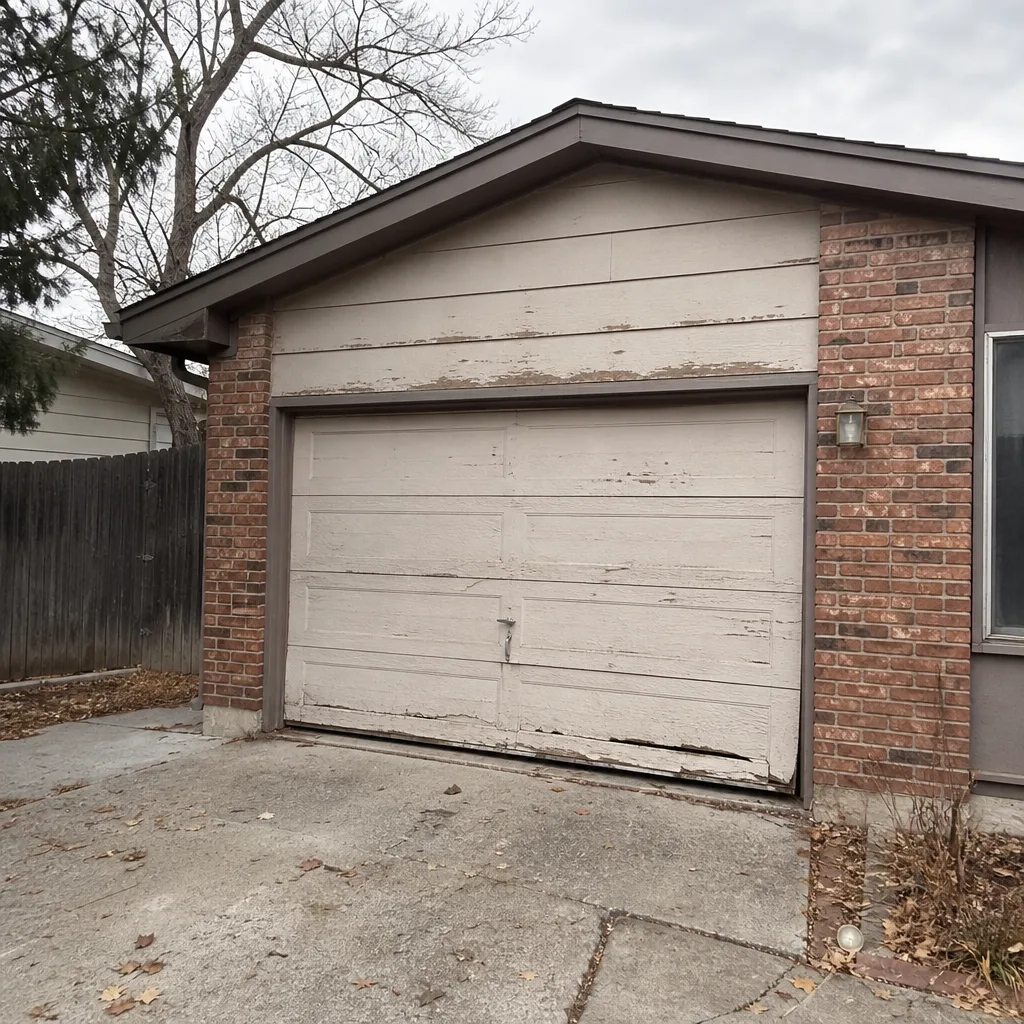
See the difference
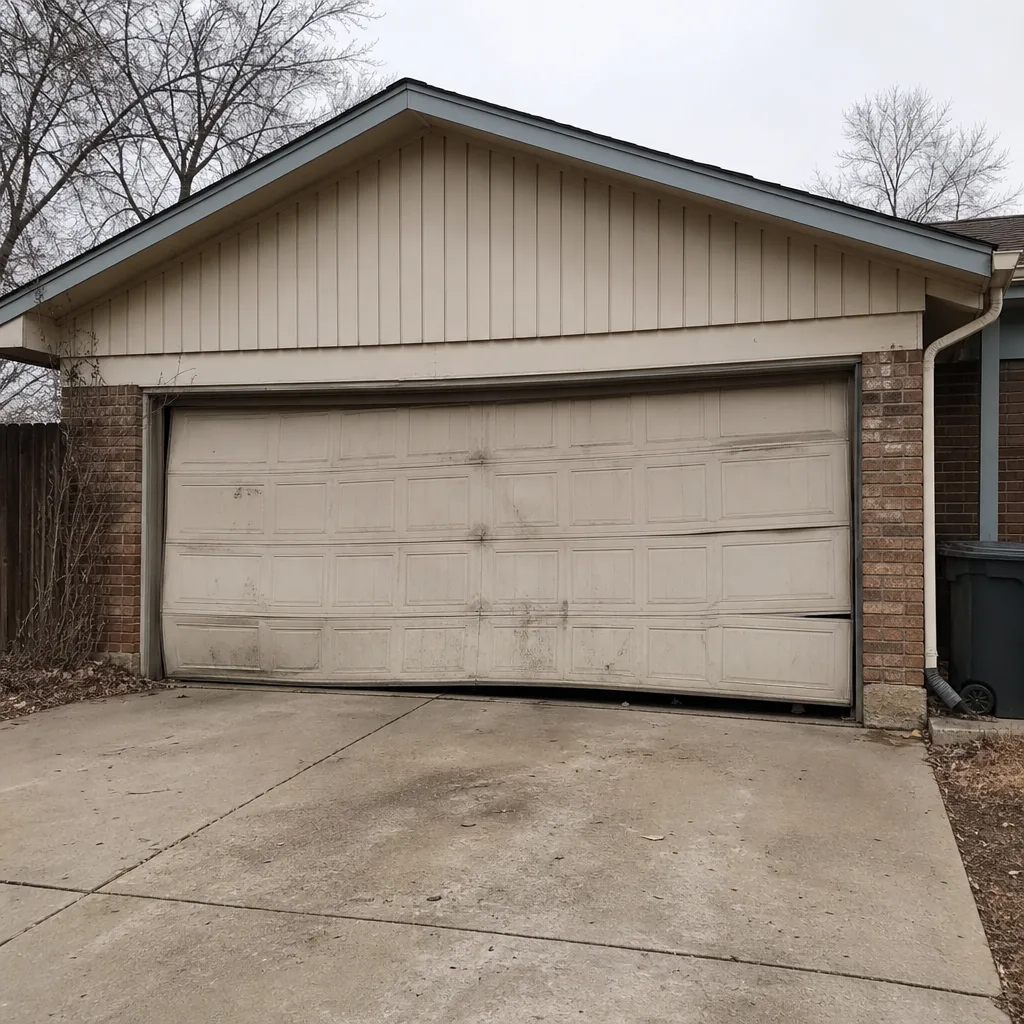 Before
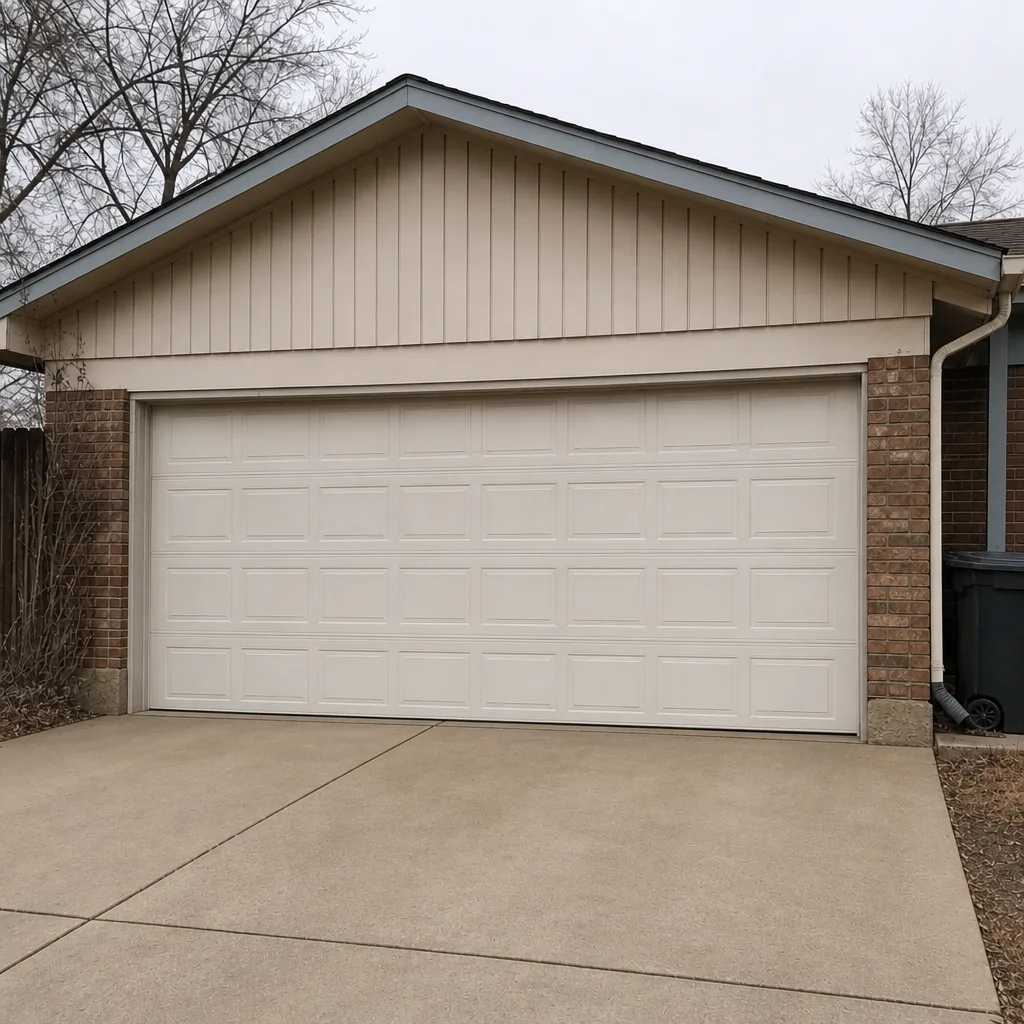 After
 Before
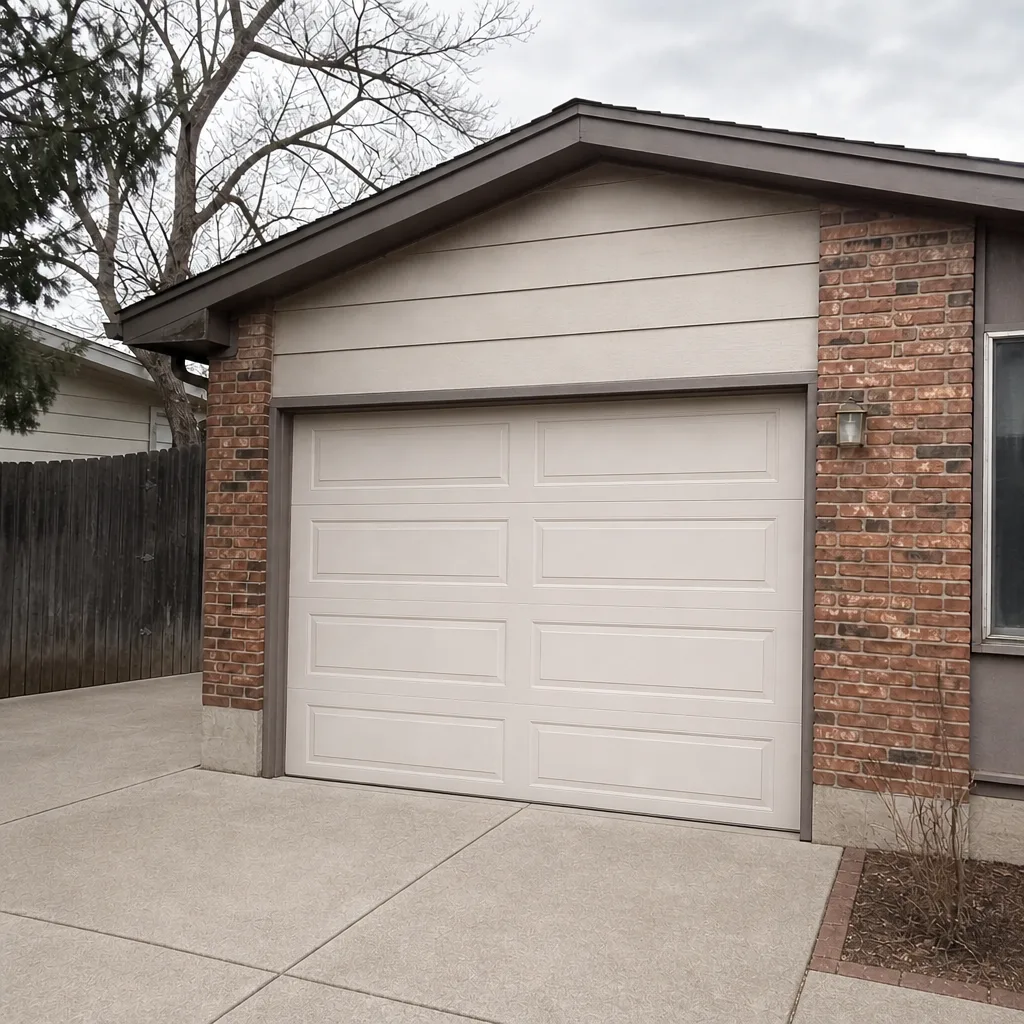 After
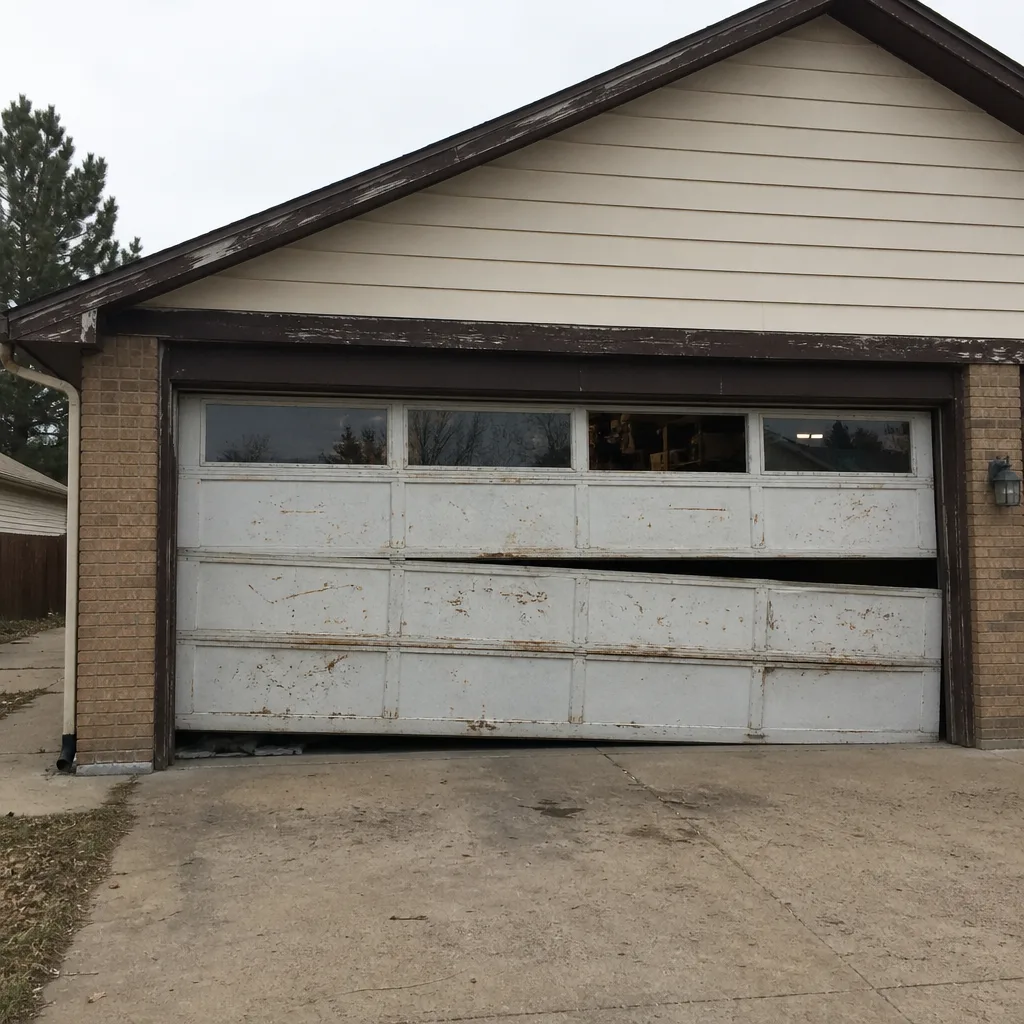 Before
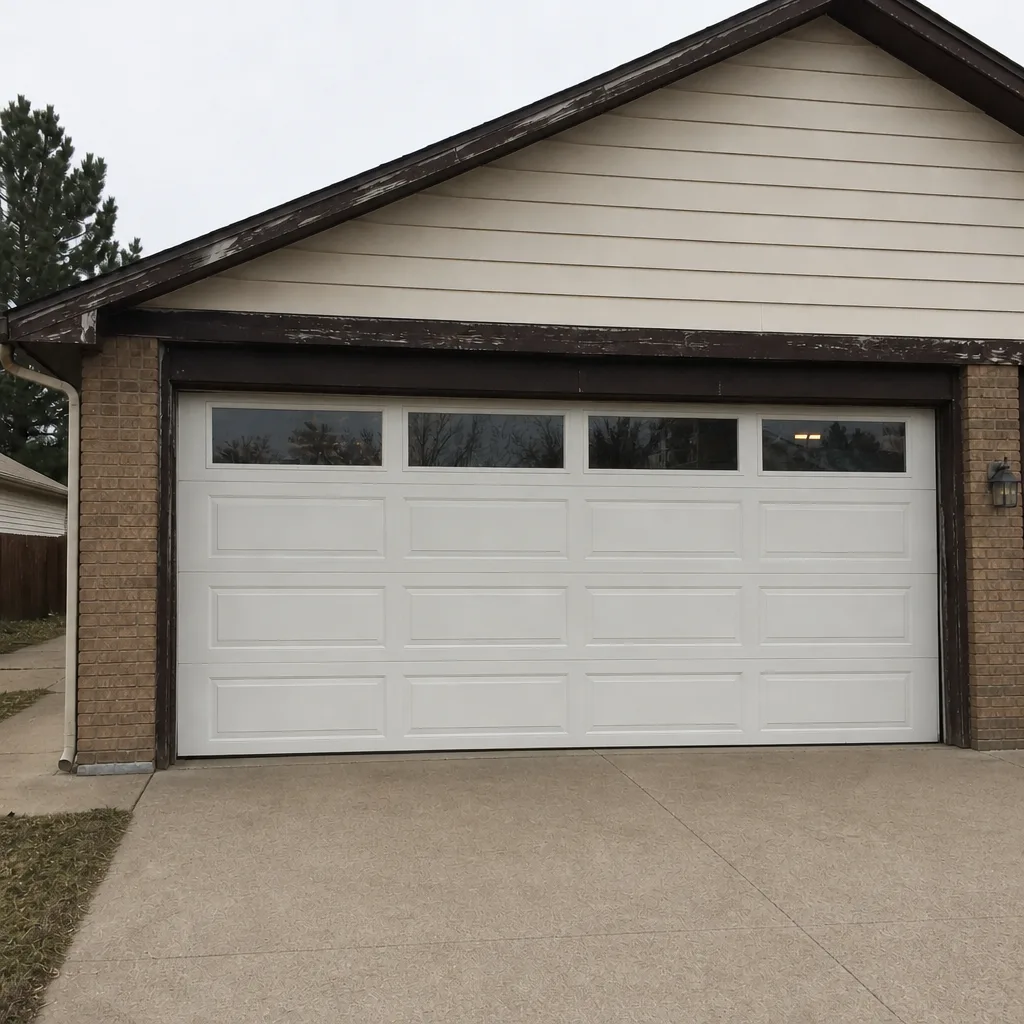 After
When to Call a Professional
Some garage door issues are maintenance. Others are the moment to stop and call. Call a professional if a spring has snapped, if the door won’t open or close, if you hear a loud bang from the garage, if a cable looks loose or frayed, if the door is off its track, or if the opener moves but the door doesn’t. Those are the situations where an unsupervised fix can turn into a serious injury or a much bigger repair. For everything else, a professional estimate is a low-cost way to know whether you’re looking at a repair or a replacement. Arvada Garage Door Repair Co offers free estimates in Arvada – call (855) 337-1853. We’ll look at the door, the springs, and the opener, and tell you plainly what needs doing.
Frequently Asked Questions
Garage door repair in Arvada typically costs between $150 and $400 for common fixes like a broken spring, a bad roller, a bent track, or an opener sensor issue. Spring replacement is usually the upper end of that range because it involves a matched pair and a safety-critical installation. The written estimate sets the final price, and it’s quoted and agreed before any work begins. Call (855) 337-1853 for an exact quote – estimates are free.
Most steel garage doors last 15 to 25 years in Colorado’s climate with regular maintenance, and the freeze-thaw cycle here is the main driver of wear. The bottom seal usually fails first, followed by panel finish and spring tension. A door that gets checked twice a year and has its seal replaced when it cracks will outlast one that gets attention only after something breaks. Call (855) 337-1853 if you’re unsure how much life your Arvada door has left.
No, not safely. A garage door replacement involves a heavy door that has to be balanced on a tensioned spring system, and incorrect installation can cause serious injury or damage to the framing. It also touches the door opening, which may require a permit depending on the scope of the work. The local professional we connect you with is insured and can confirm what’s required for your specific project.
Not on a written estimate. The price is quoted and agreed before any work starts, and the estimate you receive is the price you pay for the work described. If a technician finds something not covered by the original estimate, they’ll explain it and get your approval before doing anything extra. Call (855) 337-1853 for a free estimate.
We work on equipment from Clopay, Amarr, and all the major opener brands, along with doors and openers from Wayne Dalton, Raynor, LiftMaster, Chamberlain, Genie, and Craftsman. Being familiar with all of these means we can diagnose and source parts correctly the first time. Call (855) 337-1853 and tell us the brand and model, and we’ll confirm coverage.
Yes. The local professional we connect you with is licensed and insured as their state requires, and carries the training to safely handle springs, openers, and full installations. Credentials are what let a technician work on a torsion spring at all; that’s not a job for an unlicensed handyman. Call (855) 337-1853 to schedule a free estimate with a vetted local professional.
The Bottom Line
Arvada’s garage doors live in a specific environment: a Front Range climate that freezes and thaws through winter, a housing stock that spans 1960 to 1995, and an HOA landscape that varies block to block. The generic advice you find online doesn’t account for any of that, which is why so many repairs here trace back to a mismatch between the door and what’s attached to it. Get the spring sizing right, keep the bottom seal in shape, measure the header before ordering, and check the HOA rules before you buy. Those four habits cover most of what goes wrong. When you’re past the point of maintenance and into repair or replacement, do the work with a team that knows the brands you already own. If you’d rather just have someone look at it, Arvada Garage Door Repair Co offers free estimates – call us at (855) 337-1853. We’ll quote the price up front, agree it with you before work starts, and handle the diagnosis, parts, and completion in one visit.
Written by the team at Arvada Garage Door Repair Co.