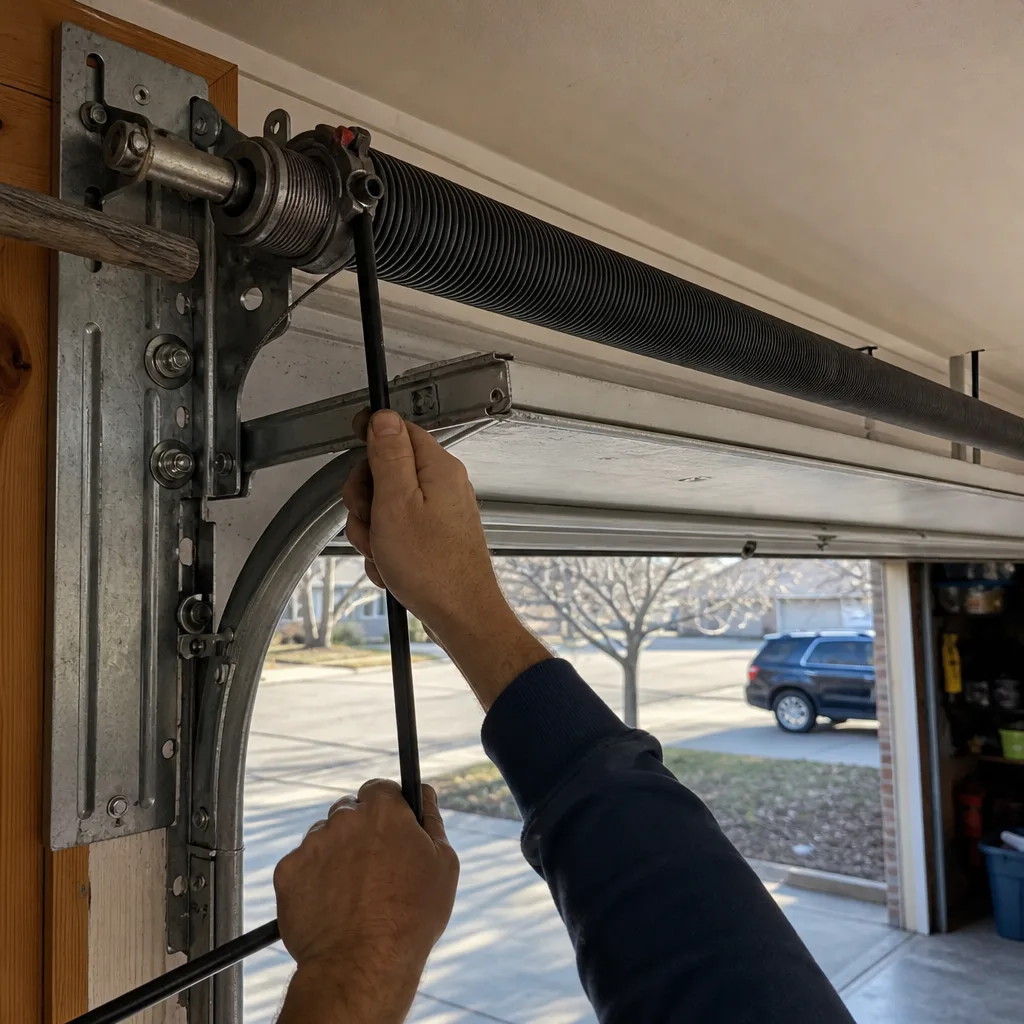
Last updated November 23, 2026
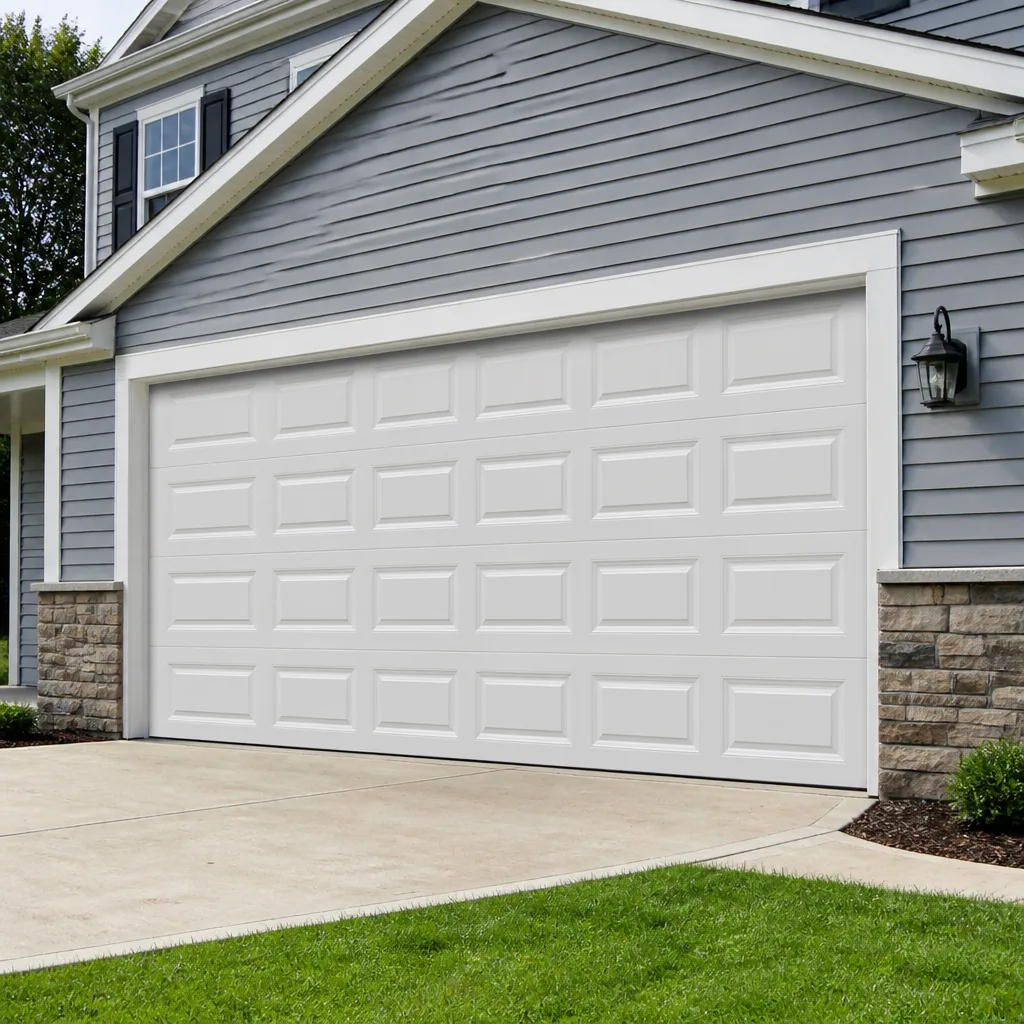 Raised-panel steel
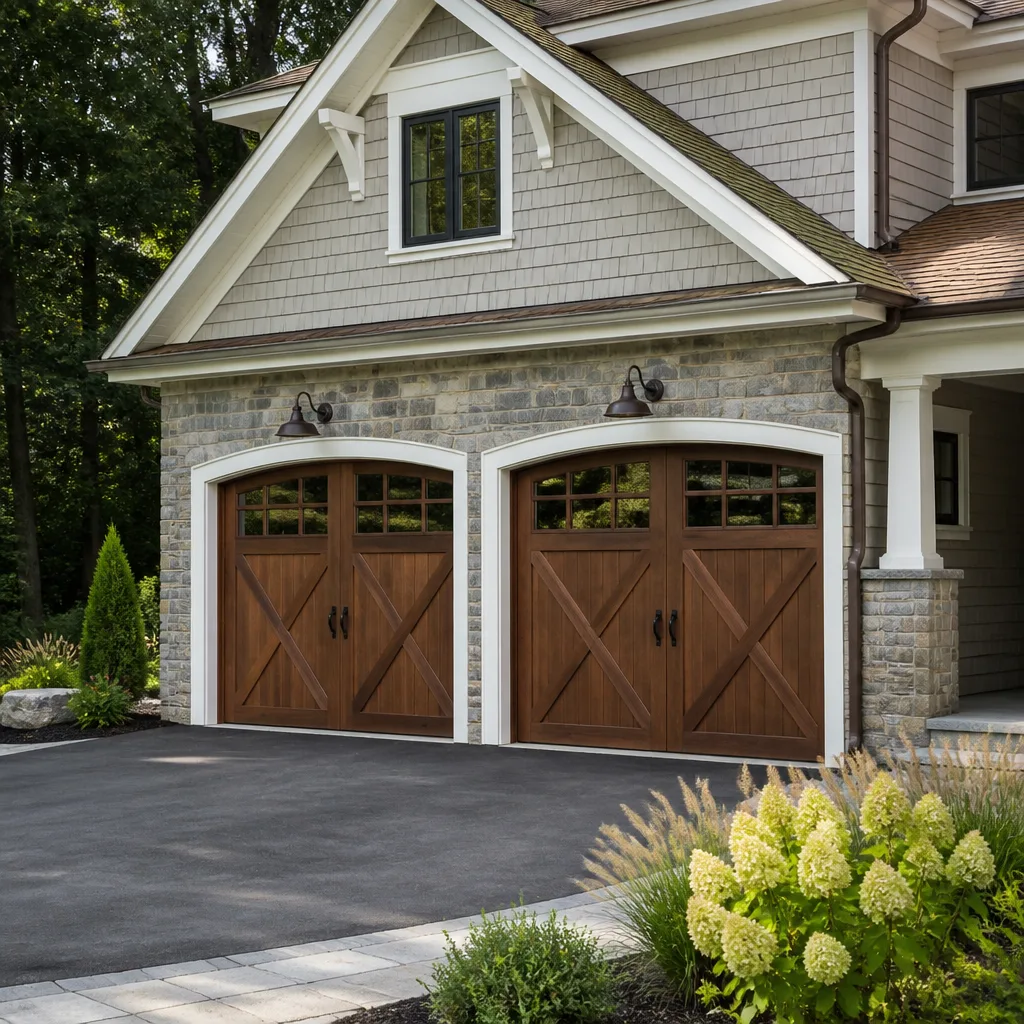 Carriage house
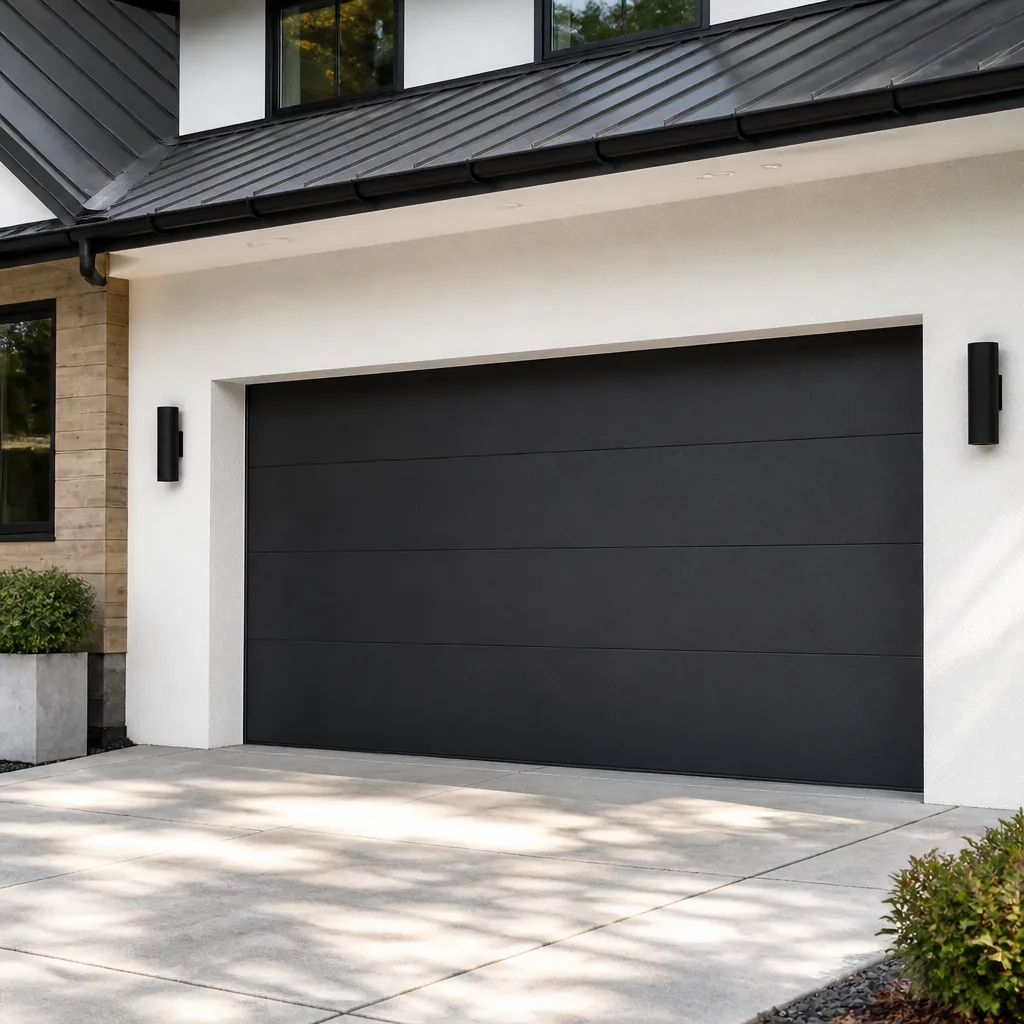 Modern flush
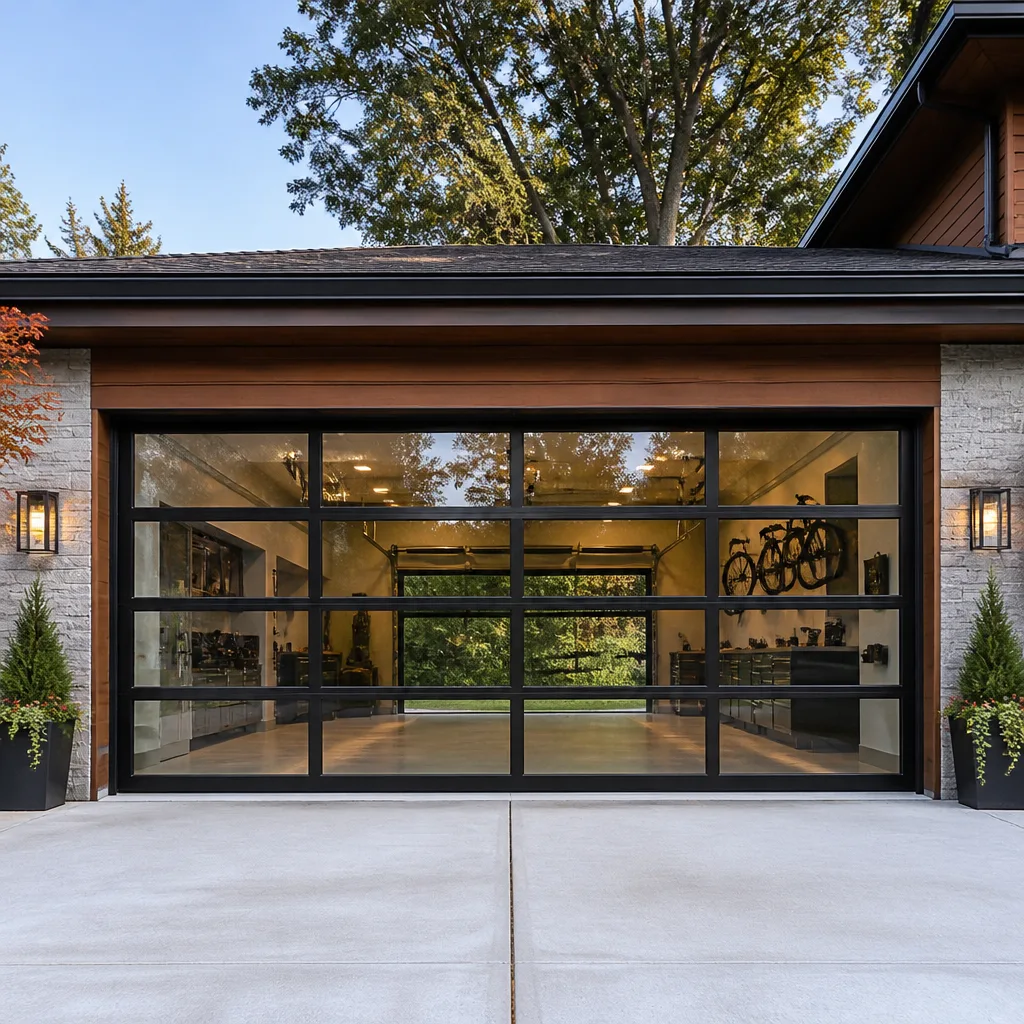 Full-view glass
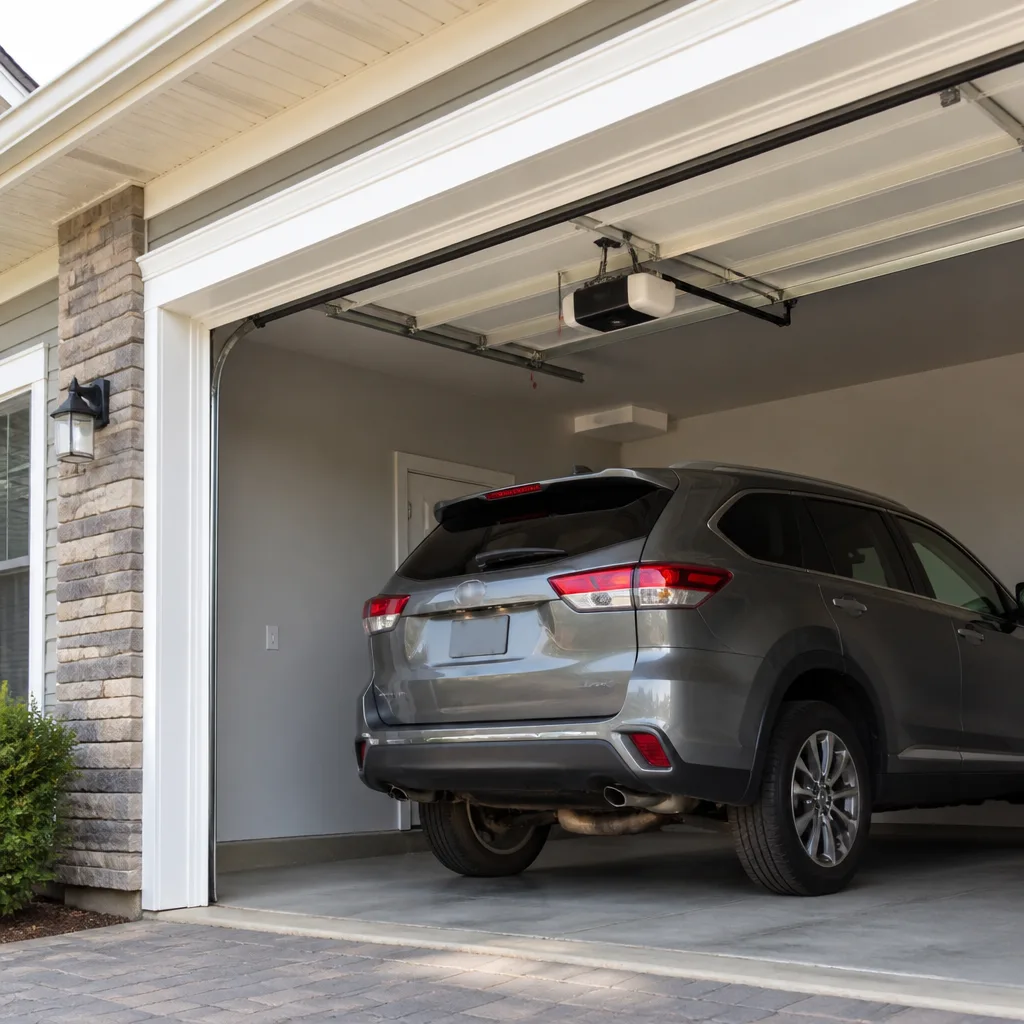 LiftMaster openers
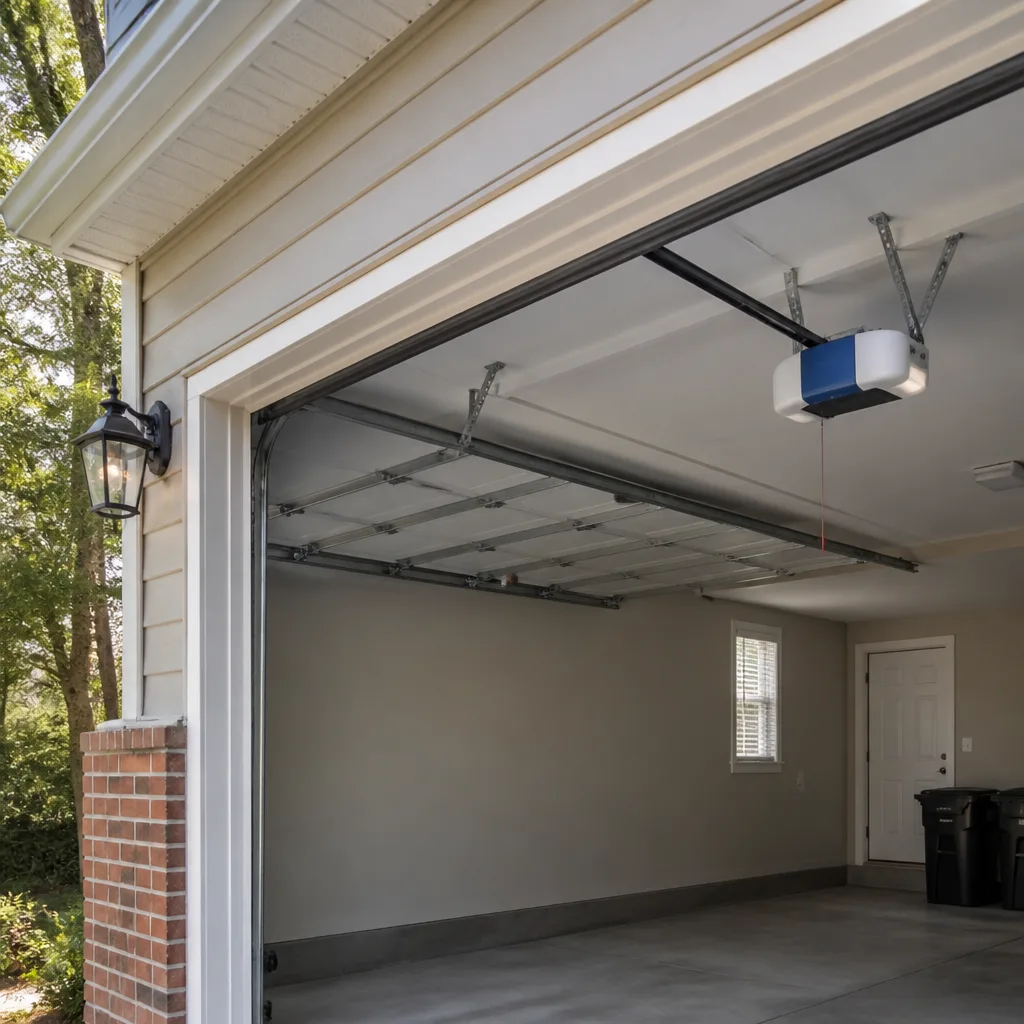 Chamberlain openers
Full 25-point door and opener safety check with every visit - springs, cables, rollers, tracks, and your LiftMaster or Chamberlain opener included
You get a price before we start. It does not change when the pro arrives.
Get your free estimateGarage Door Emergency Preparedness Guide for Arvada Homes
When a torsion spring snaps at 7am on a Tuesday, your car is trapped inside a garage you can’t open manually, unless you’ve already located the red emergency release cord and know exactly what to do with it. Most people discover they don’t. The door is the largest moving object in the house, and the moment it stops working, the whole morning stops with it. This guide covers the three scenarios that cause almost every garage door emergency in Arvada: a broken spring, a door that won’t close, and a door frozen to the floor on a Colorado winter morning. You’ll learn how to use the manual release safely, how to secure a stuck door for a few hours, what to say when you call for help, and how to check whether your opener has battery backup. Read it once before you need it, and the next emergency becomes a nuisance instead of a crisis.
Quick Answer
A garage door emergency in Arvada usually means a snapped spring, a door stuck open or closed, or a door frozen to the floor. If your car is trapped, the red manual release cord lets you disengage the opener and lift the door by hand, but only when the door isn’t jammed and no spring or cable is visibly broken. If the spring or cable has failed, leave the door closed and call for help; lifting it by hand is how people get hurt. Call (855) 337-1853 and we’ll walk you through what to do while a technician is on the way.
Styles & brands we work with
- Raised-panel steel
- Carriage house
- Modern flush
- Full-view glass
- LiftMaster openers
- Chamberlain openers
Table of Contents
- How Do You Use the Red Emergency Release Cord Correctly?
- What Do You Do When a Garage Door Won’t Close?
- What Should You Tell an Emergency Repair Dispatcher in Arvada?
- How Does a Power Outage Affect Your Garage Door in Arvada?
- How Do You Free a Frozen Garage Door on a Colorado Winter Morning?
- What Should You Do If a Spring Breaks?
- How Do You Build a Garage Door Emergency Plan for Your Arvada Home?
How Do You Use the Red Emergency Release Cord Correctly?
The red cord works by pulling the opener’s trolley free from the door carriage so the door moves independently of the motor. Once it’s pulled, the door is in manual mode and you’re lifting it by hand. That’s exactly what you want when the opener has failed but the door’s springs and cables are intact. It’s also the correct move after a power outage, because the opener is dead and the door needs to be operated by hand. The part most people get wrong is pulling the cord when the door is already jammed or when the spring has broken. In that case the door is much heavier than in normal operation, and lifting it manually can send it crashing down or put your back and hands at risk.
Here’s the right sequence:
- Look at the door. If you can see a broken spring (often a gap in a winding coil above the door), a kinked or off-track cable, or the door hanging crooked, stop here and call for help. Don’t pull the cord.
- If the door is clear and level, find the red cord hanging from the opener trolley near the top of the door.
- Pull the cord down firmly. You should hear or feel it unclip.
- Lift the bottom of the door slowly by hand. If it’s very heavy, let it back down and call. A working door should lift with reasonable effort.
- Close the door fully by hand before you walk away, so it doesn’t drop unexpectedly on someone or something.
Two important notes. First, once you’ve released the opener, the door stays in manual mode until the trolley is reconnected – usually by running the opener and re-engaging the carriage. Most openers have a way to do this, but the exact method depends on the brand, which is why a technician can reset you faster than a phone call with a generic installer. Second, if you’ve got small children, pets, or anyone who might stand in the door’s path, keep them clear until you understand what’s going on. The manual release helps you get out; it doesn’t make a broken door safe.
What Do You Do When a Garage Door Won’t Close?
A door that won’t close is the most common “emergency” in a residential garage, and it almost always comes down to a safety sensor, an obstruction in the track, or a limit switch issue. The door will often close partway, reverse, and then stop. If you need the door shut for security right now, there are temporary measures that work for a few hours – and some that are genuinely unsafe. The right approach is to secure the door without putting yourself or anyone else at risk, then get it fixed.
Here’s what to do, in order:
- Check the safety sensors first. Look at the two small eyes at the bottom of the door’s tracks on either side. If one is misaligned, dirty, or has been bumped by a dropped tool or a kid’s toy, the door will reverse on purpose. Wipe the lenses and see if both indicator lights are steady. On many models – Genie and LiftMaster among them – a flashing light means something is in the way or one sensor is out of line.
- Clear the track. Look for a ball, a piece of garden hose, or a lump of packed snow or leaf debris blocking the channel. Don’t force the door.
- Close it by hand if it’s safe. With the opener disengaged (pull the red cord), lower the door slowly and watch for the point where it stops. If it moves freely, you can close it and keep it down.
- If it won’t stay down, secure it temporarily. A door that won’t stay closed can usually be held by a bar clamp across the track or a piece of wood wedged under the bottom edge – enough to keep it shut for a few hours while you call for help.
- Don’t prop a door open with a chair or a broomstick as a “fix.” That’s a common video solution, but a heavy door resting on a stick can slam down without warning, breaking glass and injuring anyone underneath.
In Arvada, the safety sensors and the close force setting account for the majority of these calls. Both are simple to diagnose on-site, but the fix depends on the brand and model, which is where a technician who works on Clopay, Amarr, Wayne Dalton and other common brands every week has an advantage. If the door reverses twice in a row after you’ve cleared the area, don’t keep pressing the button; that’s a sign the opener is protecting itself and needs a professional look.
What Should You Tell an Emergency Repair Dispatcher in Arvada?
A good dispatcher can give you an accurate ETA if you give them the right information up front. The calls that go sideways are the ones where the homeowner has to hunt for details while a technician is already on the road. Have a few things ready before you dial. The conversation takes five minutes and saves everyone a second trip.
Tell them:
- What the door is doing. “Won’t open” is different from “won’t close” and “opens halfway then reverses.” Each points to a different system.
- What you can see. Is there a broken spring, a hanging cable, an object in the track, a door that’s crooked in its frame?
- The make and model of the door and opener. Look for a label on the opener motor (LiftMaster, Chamberlain, Genie, Craftsman, Raynor) and a sticker on the inside of the door frame (Clopay, Amarr, Wayne Dalton). Brand tells us whether the part is likely on hand or needs ordering.
- The age of the equipment, roughly. “We bought the house with it” is fine. It tells a technician whether to expect plastic gears or metal, an older disconnect design, or a battery-backup unit.
- Whether anyone is trapped or the house is open. A car stuck inside matters. A door stuck open in a snowstorm matters. Both change the urgency and the tools we bring.
- Your address and how to access the driveway. If the door is open, tell them where to park.
One thing to watch for: some companies quote an emergency surcharge that sounds like a premium fee the situation requires. It shouldn’t be automatic. Ask whether the price is a fixed call-out or an hourly rate, and ask for the number in writing before the technician starts. In Arvada, emergency service is a normal part of what we do, and you’ll get a written estimate before any work begins.
How Does a Power Outage Affect Your Garage Door in Arvada?
When the power goes out, a standard opener stops working entirely. The door isn’t broken – it just has no motor. The fix in the short term is the manual release. The fix for the next outage is a battery backup, which is a self-contained unit that keeps the opener running for a limited time. Battery backup has become more common on newer openers, but plenty of Arvada homes still have standard units without one. The two-minute check to see what you’ve got is worth doing before winter.
Here’s how to check whether your opener has battery backup:
- Look at the opener motor housing. Battery-backup units usually have a visible battery compartment or a small “Battery Backup” label on the front or side.
- Check the wall control. On many models with backup, there’s a second or status button or a small light that indicates battery operation.
- Open the battery door if you can access it from a step stool. If there’s a battery inside, you have backup. If the compartment is empty, the unit was designed for one but the battery wasn’t installed.
- Test it: unplug the opener from its ceiling outlet and see if the opener still runs the door. If it does, backup is working. If it doesn’t, you’re on standard power.
- If the unit runs but the battery is old, replace it. A dead backup battery is worse than useless because it gives you a false sense of safety.
If you’re buying a new opener or having one installed, ask about battery backup specifically, especially on a door that’s your primary entry to the house. Most modern LiftMaster and Chamberlain units, along with several Genie models, support it. A battery-backup equipped opener won’t help if the door’s spring is broken – it only covers the motor side. For that, the manual release is your backup. If you need garage door opener repair or a backup added, a technician can tell you what the unit supports.
How Do You Free a Frozen Garage Door on a Colorado Winter Morning?
The first cold snap of the season usually produces a run of calls: the opener runs, the door won’t lift, and the bottom seal is stuck to the concrete. The cause is the bottom seal, or sometimes the panel itself, freezing to the floor overnight. The right way to free it is gentle heat and patience. The wrong way – hot water – is the most common and most damaging mistake. Hot water softens the seal and can warp the bottom panel, and then it refreezes into a stronger bond within minutes. Don’t use it.
The safe method:
- Turn off the opener at the wall control or unplug it. You don’t want the motor pulling against a frozen seal – that can strip gears or burn out the opener.
- Look along the bottom of the door for the point where it’s stuck. It’s usually one side or the middle.
- Use a hair dryer on a low setting, or warm (not boiling) water poured along the seal line and a plastic scraper, to break the bond. Keep the dryer moving so the panel doesn’t overheat.
- Work a plastic putty knife or a credit card under the seal, gently, once the ice loosens.
- Once free, lift the door by hand a few inches to confirm the seal isn’t torn, then re-engage the opener.
- Stop the problem next time: treat the bottom seal with a silicone-based lubricant meant for garage doors, or a light dusting of talc under the seal, and make sure the driveway drains away from the door.
If the seal has already torn, the door is letting in cold air, water, and pests, and a new bottom seal is a quick fix. Arvada’s freeze-thaw cycles are tough on seals, and a seal that’s already stiff and cracked will freeze harder and faster each winter. If you see daylight under the door on a dry day, it’s time.
What Should You Do If a Spring Breaks?
If a spring has broken, leave the door closed and call for help. A broken spring means the door’s weight is no longer counterbalanced, and the door can weigh several hundred pounds without the springs doing their job. Lifting it by hand is how serious injuries happen. Torsion springs – the ones above the door – are under high tension, and a winding bar or a broken coil can cause severe injury. Extension springs, the ones running along the side tracks on older doors, store energy differently but carry the same warning. This is a job for a trained technician, not a weekend project.
While the door is out of service, keep it closed and latched. If your car is trapped, the safest approach may be to leave it and arrange alternate transportation for the day rather than working the door by hand. Call for an emergency garage door repair appointment and tell the dispatcher you have a broken spring. That’s the kind of call we handle as a normal part of the week: our technicians have up to 15 years of experience with garage door spring repair, and they’ll bring the right spring to the job rather than measuring and ordering later. If you’ve been told your door needs a “spring replacement kit” that doesn’t match your door, that’s a red flag – torsion springs are matched to door weight and size, and the wrong spring will either fail quickly or stress the opener.
How Do You Build a Garage Door Emergency Plan for Your Arvada Home?
Ten minutes with a step stool and a phone is all it takes. The goal is to know where things are, how they work, and who to call, before the door fails. Here’s the plan we’d suggest to any Arvada homeowner. Do it once, and the next emergency is a five-minute inconvenience.
- Find the manual release cord. Locate the red cord on the opener trolley and make sure every adult in the house knows where it is and what it does.
- Find the disconnect for the opener. You need to be able to cut power at the wall or at the ceiling outlet. Make sure it’s reachable without a ladder.
- Check for battery backup. Unplug the opener and see if the door still runs. If not, plan for the manual release next time and consider an upgrade when the opener is replaced.
- Write down your door and opener brands. Look for the labels. Clopay, Amarr, and Wayne Dalton on the door; LiftMaster, Chamberlain, Genie, Craftsman, or Raynor on the opener. Keep that note where you’d find it in a hurry.
- Keep a small kit near the garage door. A plastic scraper, a hair dryer, and a can of silicone door lubricant cover most of the quick fixes. A flashlight and a screwdriver help too.
- Save a repair number in your phone. Add (855) 337-1853 so the number is one tap away. It’s easier than searching for it while the car is stuck.
- Schedule a check-up before winter. Springs, cables, seals, and the opener’s force settings are worth a look in fall, before the first freeze. It’s cheaper than an emergency call in January.
If your home has a door that’s older than the opener, or the two were installed separately, write both down. Brand and model details cut diagnostic time, especially when the door and opener are from different manufacturers. If you want a single company that can diagnose, source the correct part, and complete the job across all your equipment, that’s the model we work from. The Arvada Garage Door Repair Co team handles everything from a single broken spring to a full new installation without a handoff to a second company.
Common Mistakes to Avoid
- Pulling the red cord when the door is jammed. If the spring or cable is broken, the door is far heavier than it should be. Release is meant for a working door with a dead motor, not a broken one.
- Pouring hot water on a frozen seal. It can warp the panel and the water refreezes into a stronger bond within minutes. Warm air from a hair dryer is the right approach.
- Propping a stuck door open with a chair or broom. Heavy doors can slam down without warning. Secure it properly or leave it closed.
- Accepting an automatic “emergency fee.” Ask for a written price before the technician starts. Emergency response shouldn’t come with a mystery surcharge.
- Replacing springs without matching door weight. Springs are sized for the door; a generic kit will fail early or overload the opener. The right spring is chosen for the door, not the shelf.
- Ignoring safety sensor warning lights. A flashing light means the door is deliberately reversing. Clearing and aligning the sensors is a two-minute fix; ignoring them keeps the door stuck.
- Pressing the opener button over and over after the door reverses. That’s the opener protecting itself. Repeated tries can strip gears and turn a small repair into a motor replacement.
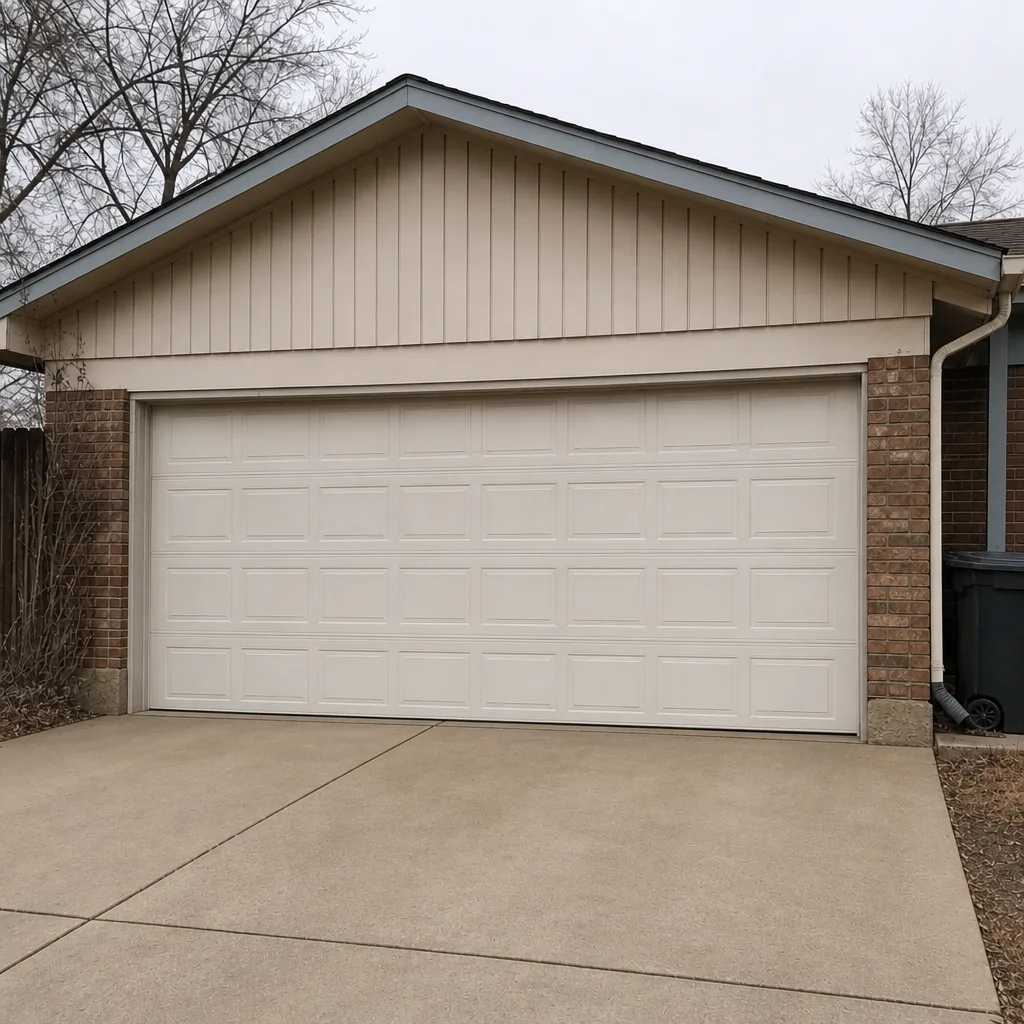
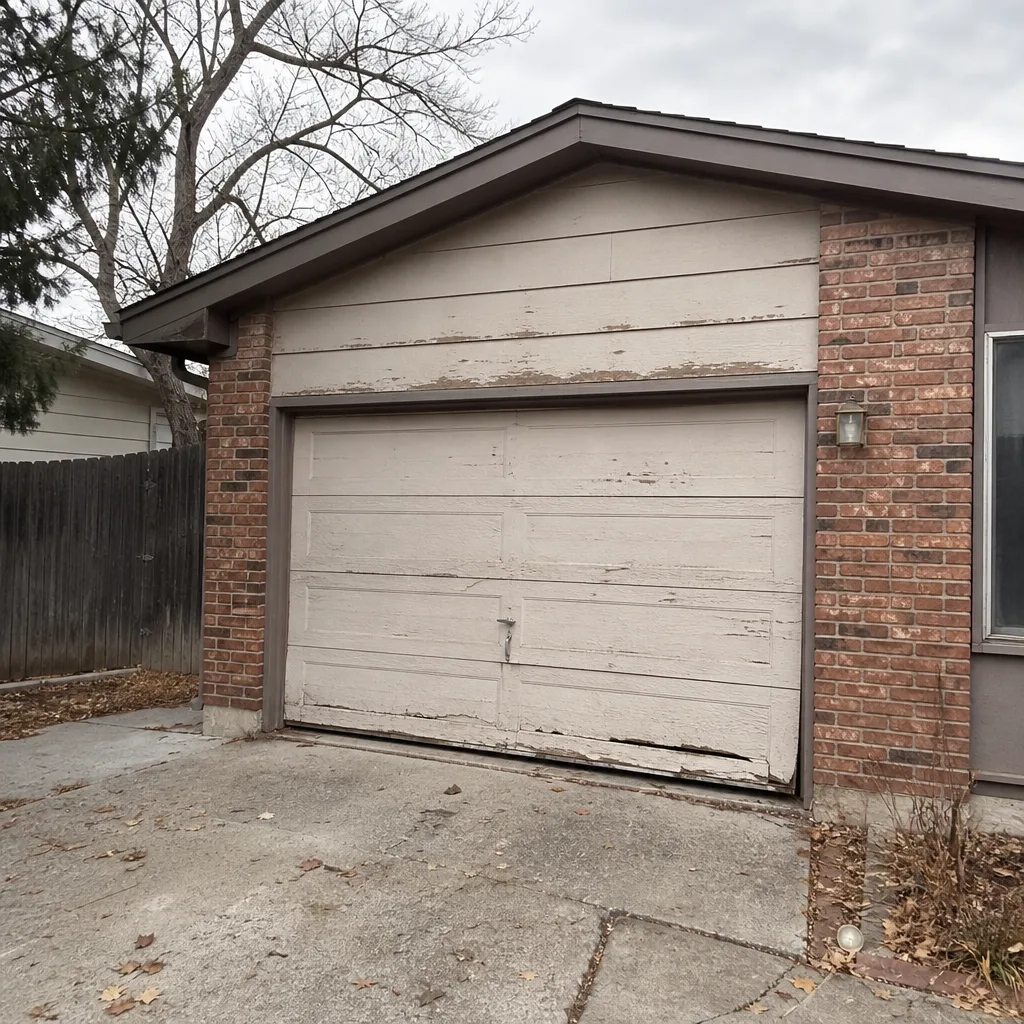
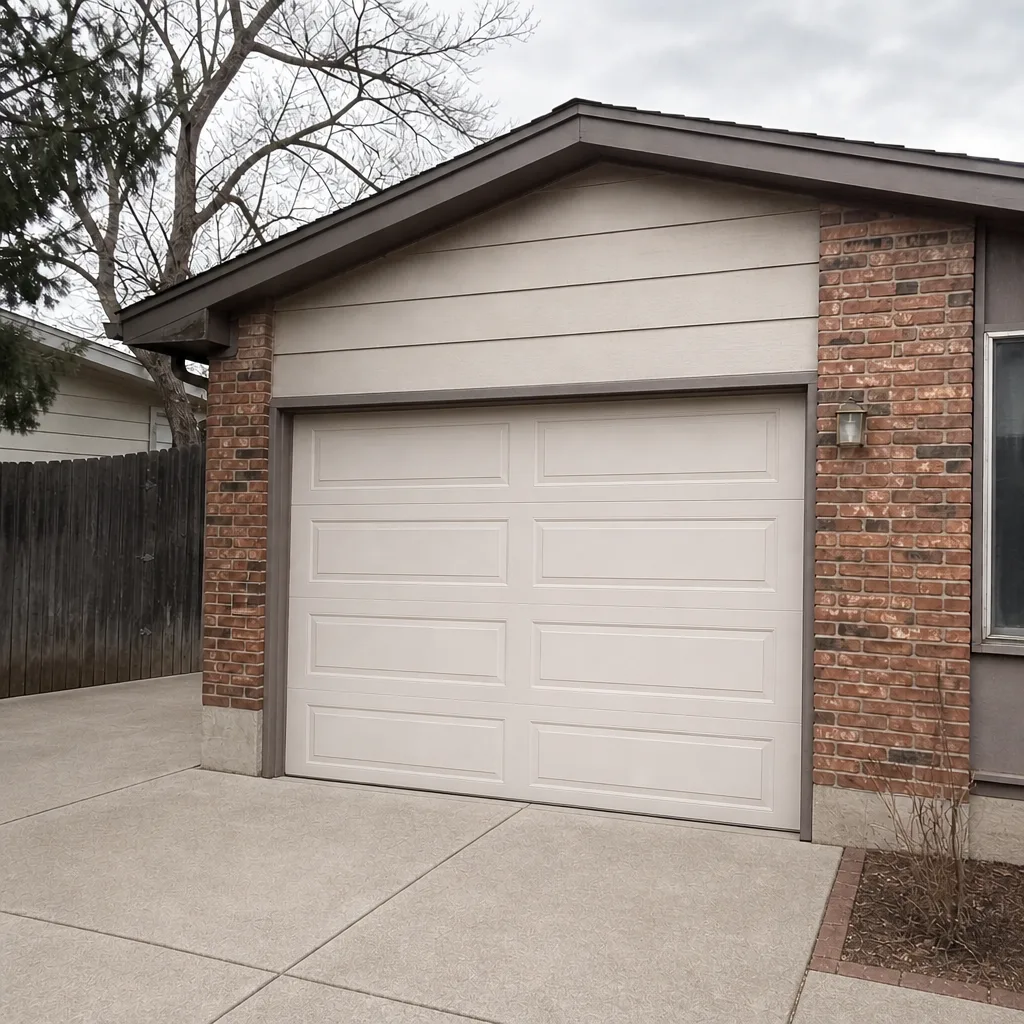
See the difference
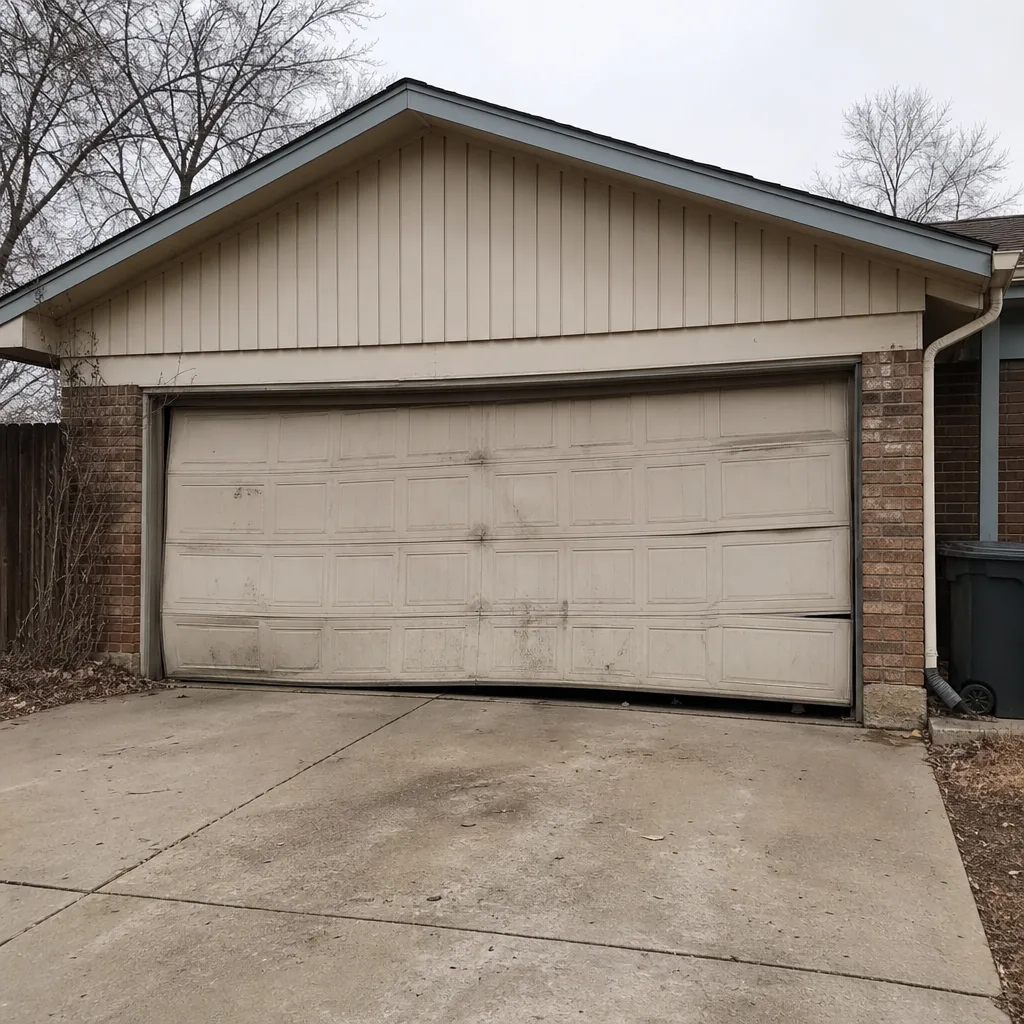 Before
 After
 Before
 After
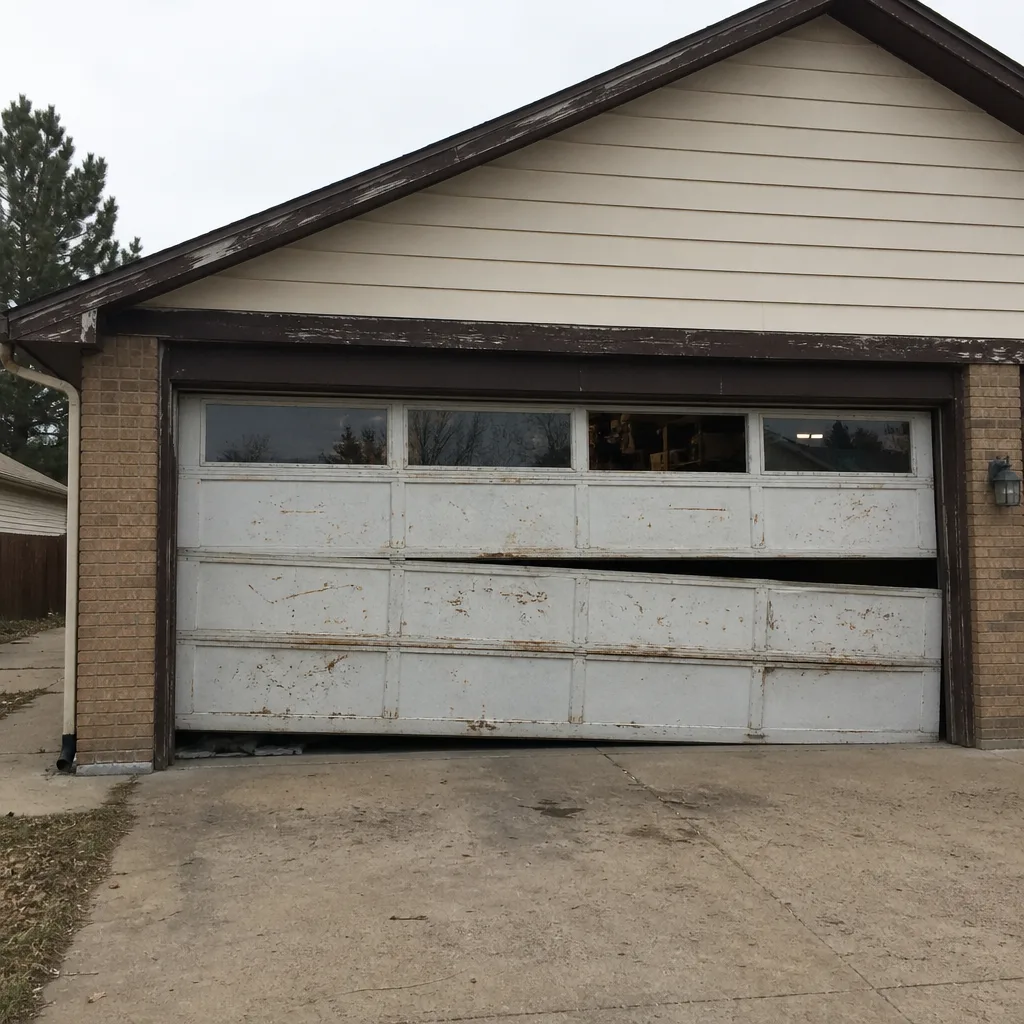 Before
 After
When to Call a Professional
Call for help when the door is stuck open and the house is exposed, when a spring or cable has visibly broken, when the door is crooked or off its track, when the opener runs but nothing moves, when the door reverses repeatedly after you’ve cleared the sensors, or when you’ve freed a frozen door and it still won’t lift. Don’t call for a door that just needs the sensors cleaned or the track cleared – a flashlight and two minutes usually handles it. If you’re not sure which situation you’re in, call anyway. Our dispatchers will tell you honestly whether it’s a DIY fix or a technician job. We handle garage door repair as our core service, with emergency response for the situations that can’t wait. Arvada Garage Door Repair Co offers free estimates – call (855) 337-1853 to schedule a visit or get a technician out today.
Frequently Asked Questions
Yes, if the door’s springs and cables are intact. Pull the red manual release cord hanging from the opener trolley, then lift the door slowly by hand. If the door is very heavy or won’t move smoothly, stop and call for help. A working door should lift with reasonable effort. Keep children and pets clear while you do this.
Check the two safety sensors at the bottom of the tracks on either side. If one is misaligned, dirty, or blocked, the door will reverse by design. Wipe the lenses and confirm both sensors have a steady indicator light. If the lights are steady and the door still reverses, the issue is likely the close-force setting or a limit switch, and it’s time to call. Call (855) 337-1853 for an exact quote – estimates are free.
Emergency repair pricing depends on what’s failed. A spring repair typically runs in the $180-$340 range for one spring, with a matched pair about twice that. Opener repairs are usually quoted after diagnosis. Every job gets a written estimate before any work begins. Call (855) 337-1853 for an exact quote – estimates are free.
No. Hot water softens the bottom seal, can warp the bottom panel, and refreezes into a stronger bond within minutes. Use a hair dryer on a low setting or warm (not boiling) water along the seal line, and work a plastic scraper under the seal gently once it loosens. If the seal tears, it needs replacing.
Look for a battery compartment or a “Battery Backup” label on the opener housing, and check the wall control for a status light. To test it, unplug the opener from the ceiling outlet and see if the door still runs. If it does, backup is working. If not, you’re on standard power and the manual release is your backup for the next outage.
Call a company that handles emergency service as a core offering and works on your brand of door and opener. Arvada Garage Door Repair Co services LiftMaster, Chamberlain, Genie, Clopay, Amarr, Wayne Dalton, Craftsman, and Raynor equipment, and our technicians have up to 15 years of experience. Call (855) 337-1853 – estimates are free.
The Bottom Line
Garage door emergencies are predictable. The spring that’s been creeping toward failure for months will eventually snap. The seal that’s been freezing every winter will eventually tear. The opener that’s needed a battery backup for years will eventually leave you in the dark. The homeowners who handle these calmly aren’t luckier; they’ve just done the ten-minute plan: they know where the red cord is, they know their door and opener brands, they’ve checked for battery backup, and they’ve saved a repair number. None of it costs anything. All of it makes the next emergency a nuisance instead of a crisis. If your door is stuck right now, call. If it isn’t, walk out to the garage this week and do the check.
Whether the door is stuck open, the spring just snapped, or you’re planning ahead before the next freeze, our team is ready to help. Arvada Garage Door Repair Co connects Arvada homeowners with independent local professionals who diagnose the problem, source the right part, and finish the job in one visit. Call (855) 337-1853 for a free estimate – we’ll give you a written price before any work starts, so there are no surprises on the invoice.
Written by the team at Arvada Garage Door Repair Co.