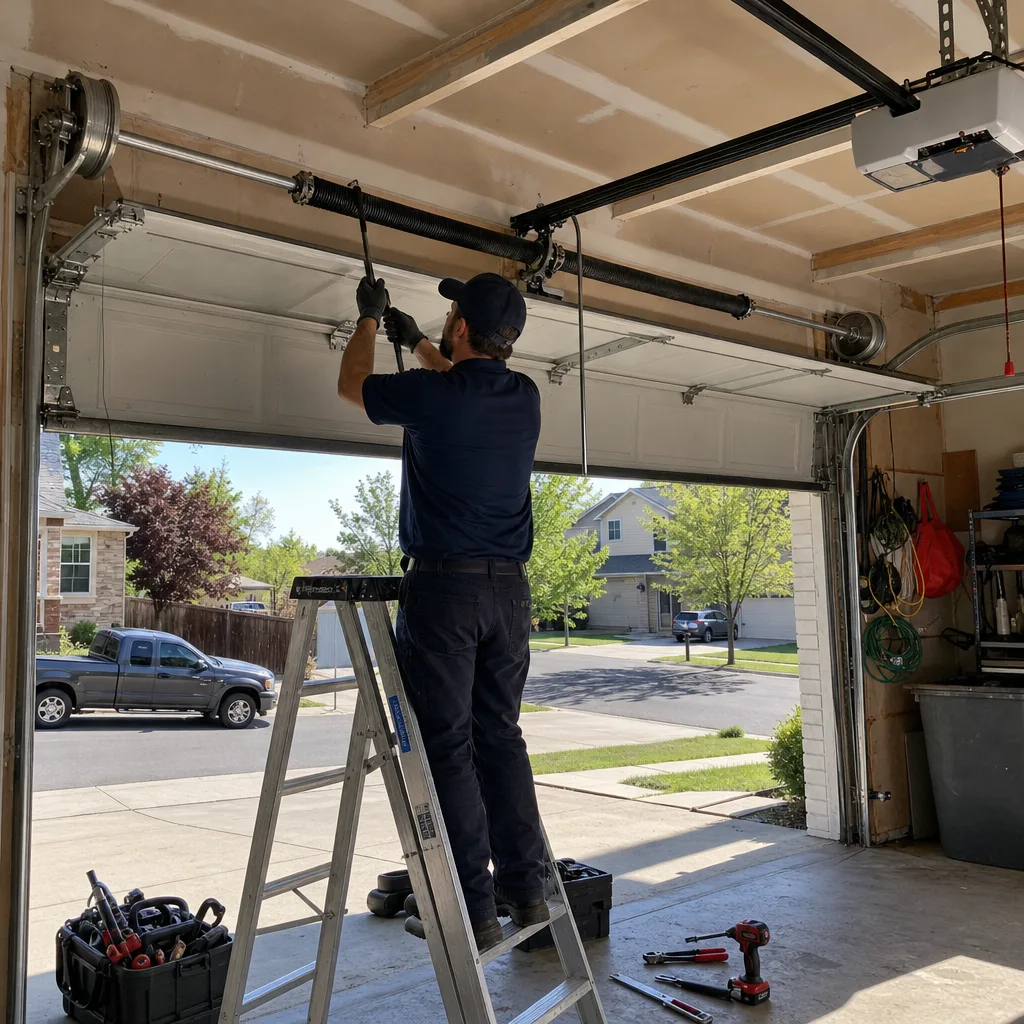
Last updated November 23, 2026
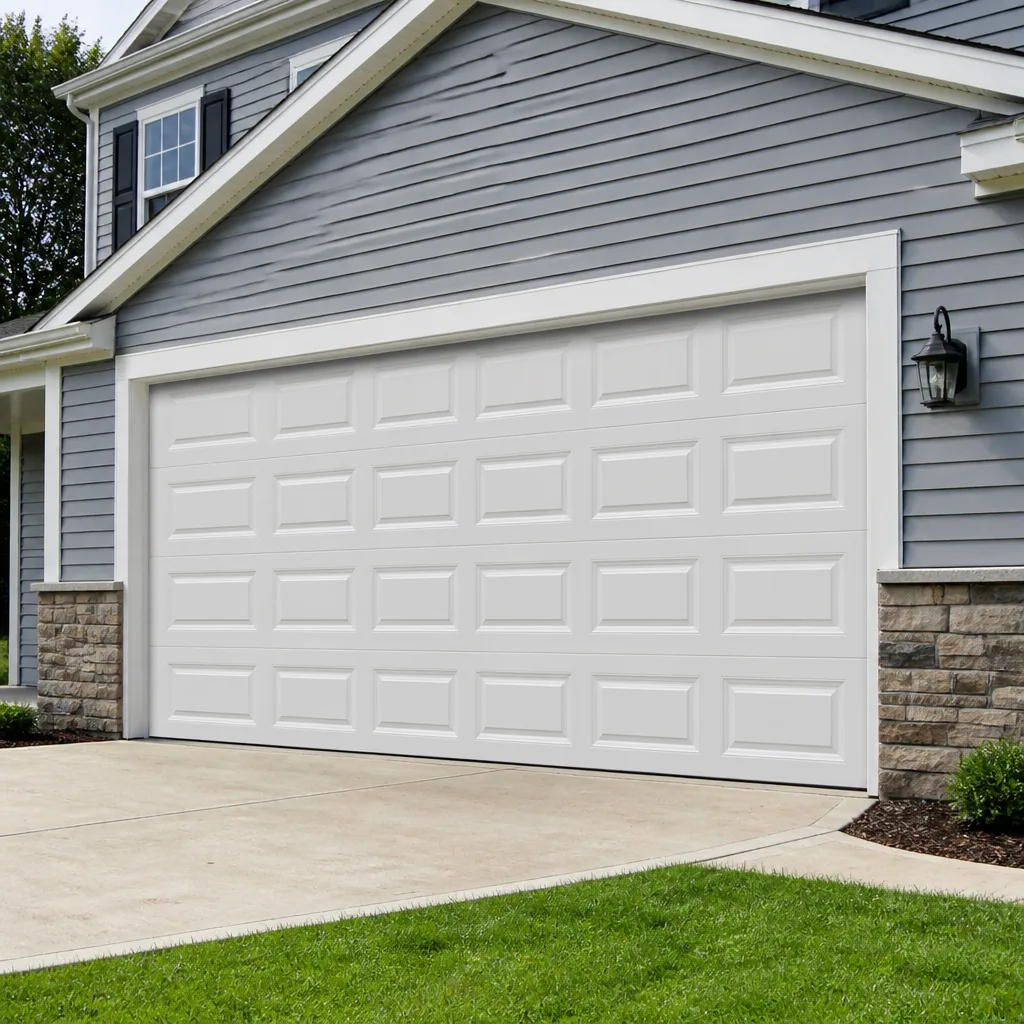 Raised-panel steel
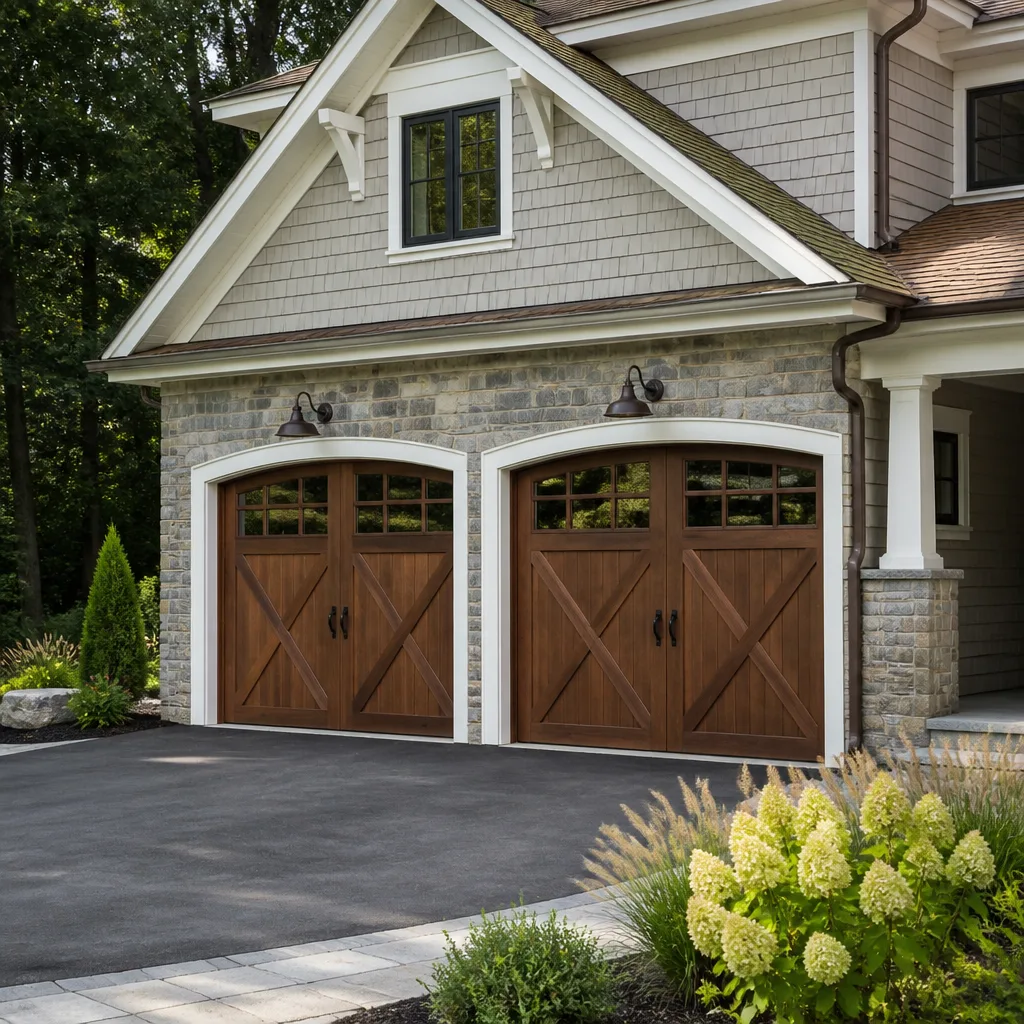 Carriage house
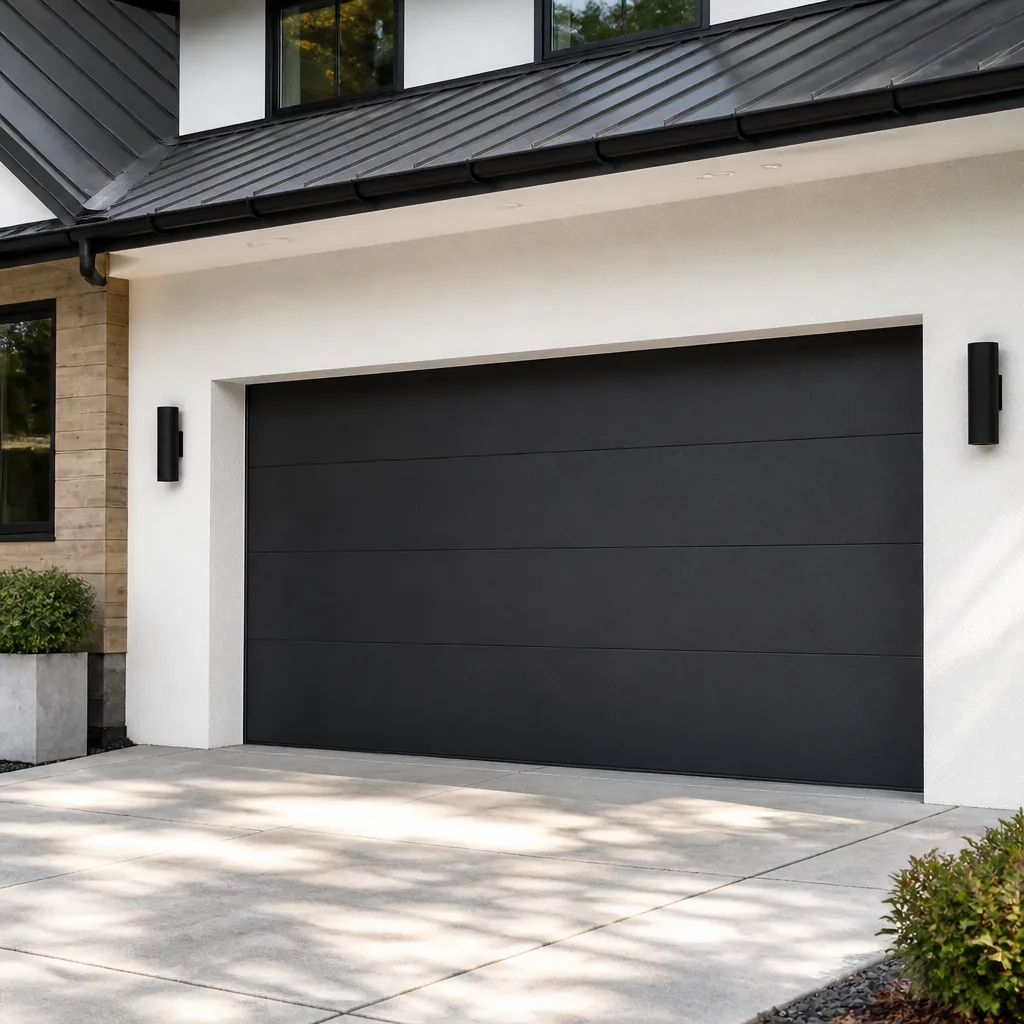 Modern flush
 Full-view glass
 LiftMaster openers
 Chamberlain openers
Full 25-point door and opener safety check with every visit - springs, cables, rollers, tracks, and your LiftMaster or Chamberlain opener included
You get a price before we start. It does not change when the pro arrives.
Get your free estimateGarage Door Warning Signs: An Arvada Homeowner’s Reference Guide
The most dangerous warning sign on a garage door is the one that feels like no big deal. A door that “just seems a little slow,” a faint squeak you’ve been meaning to look at, a slight shake at the halfway point. In our experience, that quiet slowdown is the single most dismissed sign in the trade, and it’s often the last thing a homeowner notices before a torsion spring gives out under load. Most garage door failures don’t come out of nowhere. They come from signals nobody knew how to sort into “cosmetic” and “call someone.” This guide draws that line for Arvada homeowners, covering the sounds, the cable wear, the uneven travel, the motor quirks, and the floor gap test that tells you whether the whole door has shifted.
Quick Answer
The main garage door warning signs are: a door that moves slower than it used to, grinding or popping sounds, an opener that hesitates or reverses with nothing in the way, frayed or kinked cables, uneven travel (one side faster than the other), and an uneven gap at the floor when the door is closed. Of these, uneven travel, visible cable fraying, and a sudden slowdown are the ones worth treating as urgent rather than cosmetic. Anything involving the springs, cables, tracks, or the balance of the door is a call for a trained technician, not a weekend project.
Styles & brands we work with
- Raised-panel steel
- Carriage house
- Modern flush
- Full-view glass
- LiftMaster openers
- Chamberlain openers
Table of Contents
- The Slowdown: The Sign Everyone Ignores
- Decoding the Sounds: Annoying vs. About to Fail
- Cable Fraying: What Healthy vs. Near-Failure Actually Looks Like
- Uneven Travel: Why This Is Never a Minor Issue
- Opener Warning Signs That Live in the Motor
- The Floor Gap Test
- What’s Actually Normal (Don’t Panic)
- When to Call a Professional
The Slowdown: The Sign Everyone Ignores
A garage door that used to rise in about eight seconds and now takes twelve isn’t being lazy. It’s telling you the balance has changed. A torsion or extension spring system is sized to counteract most of the door’s weight, so the opener only has to nudge it along. When that balance drifts, the opener works harder, the travel feels sluggish, and the whole mechanism is under stress it wasn’t designed for.
Here’s the part most homeowners miss: a slowdown is frequently a spring already in the early stages of losing tension. The spring isn’t cracked yet, but it’s weakened, and a weakened spring can fail under load with no further warning. That’s why a “little slower than usual” belongs on the urgent side of the line, especially on a door that’s seen several years of temperature swings.
Arvada’s climate feeds this. The door travels through summer heat and below-freezing winters every year, and that cycling works the springs, the cables, and the rollers. A door on a west-facing Arvada garage takes the afternoon sun and gets even more thermal cycling than one that’s shaded. The springs feel it first.
What to check without touching the springs:
- Time how long the door takes to fully open and close. If it’s noticeably slower than a few months ago, that’s your flag.
- Push the door up about a foot by hand while the opener is disengaged. A properly balanced door should stay roughly where you put it. One that slams back down or rises on its own is out of balance.
- Listen for a heavier motor hum on the way up. That’s the opener compensating.
Do not attempt to adjust a torsion spring yourself. Those springs are under extreme tension even when the door is down, and the tools to release that tension safely aren’t in a typical homeowner’s garage. This is a job for a technician who does it daily.
Decoding the Sounds: Annoying vs. About to Fail
Every garage door makes noise. The trick is sorting the noise that just needs a little lubrication from the noise that means something is under structural strain. Here’s the distinction we use.
The “annoying but fine” sounds
- A steady squeak or chirp during travel. Usually dry rollers, dry hinges, or a dry opener rail. You’ll hear it in the same spot every cycle. It’s a maintenance item, not an emergency.
- A soft rumble from the opener unit itself. Normal motor noise, especially on older chain-drive units like the ones common on many Craftsman and LiftMaster systems.
- A single thud when the door reaches the floor. Sometimes just the door making contact, sometimes the close-limit needing a small tweak. Watch whether it gets worse over a couple of weeks.
The “stop and look” sounds
- A pop or snap, followed by the door suddenly feeling heavier or falling shut fast. That’s almost always a broken spring. Stop using the door immediately.
- A grinding that only happens on the way up. This one is a common clue that something in the opener’s gearing or the door’s balance is failing. It doesn’t grind on the way down because going up is the load-heavy direction.
- A scraping or metal-on-metal shriek during travel. Frequently a roller that’s seized, a cable rubbing the track, or a track that’s been pushed out of alignment.
- A rhythmic clunk-clunk-clunk that speeds up with the door. Often a bent or worn section hinge or a roller with a flat spot.
If the sound is new, repeatable, and gets louder each week, treat it as structural. If it’s a steady, quiet squeak you’ve heard for months and the door still moves smoothly, it’s a lubrication and tune-up issue. A technician can tell the two apart in a couple of minutes. The garage door repair team diagnoses exactly this kind of noise on a routine visit.
Cable Fraying: What Healthy vs. Near-Failure Actually Looks Like
Cables are the part homeowners look at least and should look at most. Every door with a torsion spring has two cables running up each side, wound on a drum at the top and attached to the bottom bracket. They carry the door’s weight alongside the spring, and when one fails, the door drops or twists dangerously.
Here’s how to tell a healthy cable from one that’s close to letting go, without photos:
What a healthy cable looks like
- The strands are tightly wound together with no visible splaying. Run your eyes up the length and it should look like one solid dark line.
- No rust stains down the door panel beneath it. A little surface oxidation at the drum is normal, but rust running down the side means moisture is getting in somewhere.
- The cable is taut against the drum and the bottom bracket, without slack or a visible kink.
- The bottom bracket is solid, no cracks, no wiggle.
What a cable near the end looks like
- Broken strands standing off the bundle. Even one or two strands standing out at a bracket or near a drum is a sign the cable has lost load capacity.
- A visible kink or a “birdcage” at one end, where the cable has wound unevenly or wrapped over itself on the drum. This is what it looks like when the drum is tracking badly.
- Rust streaks running down the door, especially on the side that gets the most weather.
- A cable that has jumped off the drum entirely. The door is now unsupported on that side. Stop using it.
Once a cable is fraying, it’s not a “watch and see” situation. A single broken strand means the rest is carrying more than it was designed to, and the failure timeline can be measured in weeks or days, not months. If the door isn’t moving evenly or you can hear a faint snap on one side and not the other, that’s a call.
For anyone who wants the full picture of how a spring-and-cable system works and why it’s the highest-risk part of a garage door, our page on garage door spring repair walks through the load path. The short version: this is not a DIY repair. A wound torsion spring can injure a person in an instant, and a cable under tension can strike like a whip. Leave it to a technician who does this daily.
Uneven Travel: Why This Is Never a Minor Issue
A door that rises faster on one side than the other is telling you one of a few things: a spring has weakened more than its partner, a cable has stretched or started to slip on its drum, or the tracks have lost alignment. None of those are cosmetic. An uneven door is under unbalanced load, and that load gets worse every cycle, because the stronger side is pulling harder than the weaker one.
Here’s what uneven travel usually indicates, in order of likelihood:
- One spring has lost more tension than the other. On a two-spring setup, the springs work as a pair. If one weakens, the door tilts during travel.
- A cable has stretched or partly jumped its drum. If the drum on one side is wound unevenly, that side’s cable is effectively shorter.
- A track has been knocked out of plumb, often after a car bumper taps it or a door panel clips it on the way up.
- A roller is seized or a hinge is bent on one side, adding drag on just that side.
Uneven travel is the sign most likely to become a “today” call. A door that’s noticeably tilting or catching on one side can bind against a track, and when a heavy door binds, panels get bent and brackets tear out. That turns what might have been a spring adjustment into a panel replacement. If your door is tilting, call for help today.
In Arvada, the neighborhood tells you where to look first. Garages on the older streets of Olde Town and the surrounding blocks often have doors that have seen many years of thermal cycling and may still have extension springs rather than torsion. Newer construction in neighborhoods like Candelas or Whisper Creek typically uses torsion systems that are properly balanced from the start. Either way, “one side faster than the other” is a balance problem, and balance is a spring or cable problem.
Opener Warning Signs That Live in the Motor
Some warnings live in the door. Others live in the opener, and homeowners often chase the wrong one. If the door itself looks fine, moves smoothly by hand, and the cables look healthy, but the opener behaves strangely, the opener is the problem. This is where brand familiarity pays off. A technician who knows a Genie screw-drive from a LiftMaster belt-drive from a Craftsman chain unit will diagnose the motor faster than someone guessing at it.
The opener warning signs to take seriously:
- Hesitation at the start. You press the button, there’s a pause, then the door jerks into motion. That’s often the opener’s logic board or capacitor struggling, sometimes a sign of a failing gear.
- Reversal without obstruction. The door goes partway up and then stops and reverses back down even with nothing in the way. That’s usually a symptom of a problem with the safety sensors or the opener’s travel limits, and a door that reverses unpredictably is a hazard.
- Grinding that only happens on the way up. The load direction is different going up. Grinding in one direction often means the opener’s drive gear is wearing. Older Genie and Chamberlain units with plastic drive gears are common culprits.
- Random stops or full signal dropout. The opener just stops and won’t respond to the remote or wall button until you cycle the power.
- A remotes-and-wall-button mismatch. If the wall button works but the remotes don’t, the issue is usually the receiver or the remote batteries; if neither works, the logic board or the safety sensors are usually the suspect.
Opener repair is a separate skill from door repair, which is why a general handyman often gets stuck here. Compatibility matters too. A Clopay door using a Chamberlain opener has different travel-limit and safety-reverse behavior than a Wayne Dalton door paired with a LiftMaster. Knowing the brand cuts down on wrong guesses. If you’re hearing these symptoms, our team handles garage door opener repair, and we work on every major opener brand.
The Floor Gap Test
Here’s a test done with nothing but your eyes, and it’s the one that tells you whether your door is still sitting square with your garage floor.
How the test works
- Close the door fully.
- Stand inside the garage, facing the door, and look at the seam where the bottom of the door meets the floor.
- Look for an even line across the full width. What you want is a smooth, consistent gap of about the thickness of a rubber seal.
- Now look at the gap at the left edge, the middle, and the right edge. If it’s uneven – wider at one end and narrower at the other – that’s your clue.
An uneven bottom gap can mean three things, and they have different weight:
- Panel integrity. If one end of the bottom panel has shifted or sagged, the door is no longer square. This often follows a minor impact or a door that’s been binding against a track for a while.
- Track alignment. A track that’s gone out of plumb will let the door sit tilted when closed, which shows up as a wider gap on one side.
- Foundation movement. Here’s where Arvada behaves differently from a lot of towns. The clay-heavy soil along the Front Range expands when wet and shrinks in dry spells, and a garage slab that’s moved even slightly will throw the door’s meeting line off. If the gap in your door matches a gap in your garage floor, the floor is the clue.
In a house with an older, cracked garage slab, a modest gap is a floor issue as much as a door issue. A technician can usually correct the door’s seal line with a bottom adjust, but if the slab has moved enough to make the gap persistent, the honest fix is to plan around it rather than fight it. Either way, an uneven gap is worth a look, because a door that sits off-square on the floor is also closing against uneven pressure at the top.
What’s Actually Normal (Don’t Panic)
Not everything your door does is a warning. A lot of what worries homeowners is completely routine. Getting this part right matters, because panicking over a squeaky roller wastes money and makes people overlook a real problem elsewhere. Here’s what we treat as normal on a healthy door.
- A low rumble from the opener. Chain and screw drives are noisier than belt drives, and older Craftsman units commonly have a deeper rumble that’s just how they sound.
- A gentle squeak in cold weather. Metal parts shrink in winter, and the same rollers that were quiet in July can squeak in January. If the sound goes away with a lubrication and the door moves smoothly, it was just cold.
- A single dull tap when the door hits the floor. As long as the door isn’t bouncing back up or pressing hard against the floor, this is usually just the close limit.
- A slight noise when one panel crosses the top of the curve. Panels flex slightly as they go around the radius; that’s the geometry of a sectional door.
- Faint vibration you can feel through the wall. Normal on a heavy door with a chain-drive opener.
The contrast matters. Normal sounds are steady, predictable, and haven’t gotten worse over weeks. Warning sounds are new, in a specific spot, and getting more pronounced. If you’re not sure which pile your door’s noise belongs in, a quick look by a technician settles it. We’d rather tell you the door is fine than watch you replace a part you didn’t need. That’s what a free estimate is for.
Common Mistakes to Avoid
- Treating a slowdown as normal aging. A door that’s gotten slower over a few months isn’t aging gracefully; it’s telling you the spring system is losing tension. Waiting for the spring to fail is how a manageable repair becomes an emergency.
- Using the door after a snap, pop, or sudden drop. Once a spring or a cable lets go, the opener is now working against the full weight of the door, and a second failure can follow quickly. Stop using the door and call.
- Spraying grease on the springs. Lubrication belongs on the rollers, hinges, and the opener rail, not on a torsion spring. Grease on a spring collects grit and, worse, it hides the surface cracking that shows a spring is about to fail.
- Tightening down a wobbling track with a wrench by hand. A track adjustment that’s a few degrees off will bind the door worse. In Arvada’s older garages, track alignment and slab movement often go together, so the honest fix requires more than a quick turn of a bolt.
- Assuming a reversing door has a sensor problem and unplugging the safety sensors to “fix” it. Disabling the safety reverse is genuinely dangerous, especially on a door that opens onto a driveway where kids play. A reversing door needs a diagnosis, not a bypass.
- Replacing the opener when the door is the problem. If the door feels heavy by hand while the opener is disengaged, the springs and cables are the issue. A new opener will fail faster against an unbalanced door.
- Ignoring a floor gap because “it’s always been that way.” On the Front Range, an uneven bottom gap can be a sign of slab movement that will get worse with every dry summer and wet spring.
See the difference
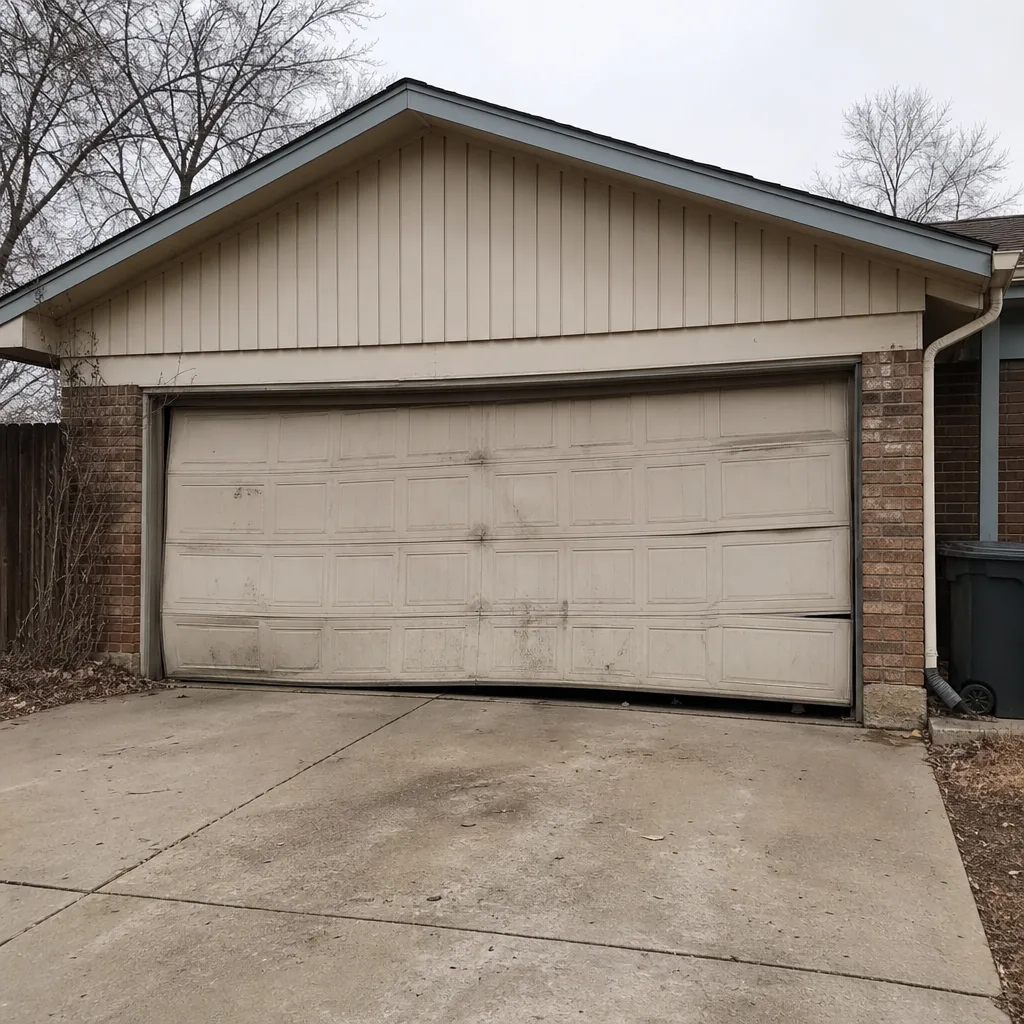 Before
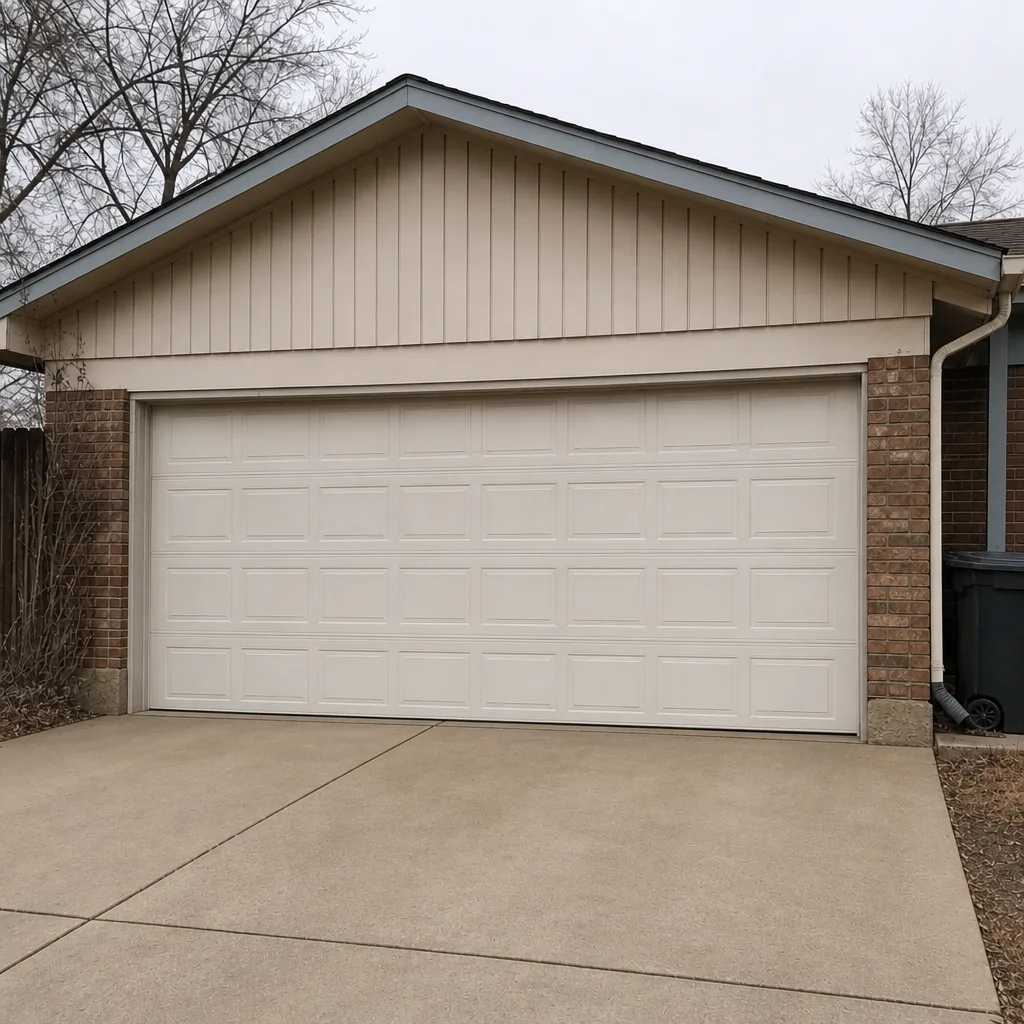 After
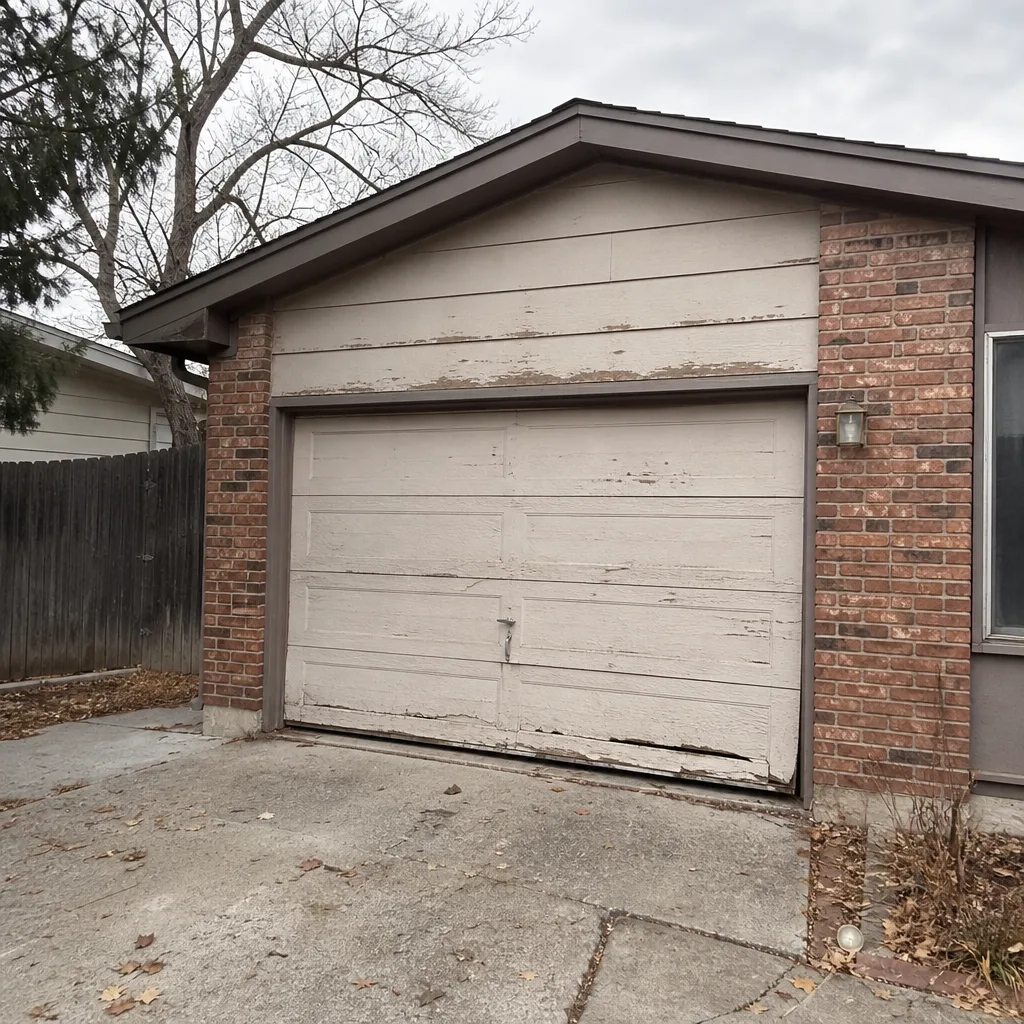 Before
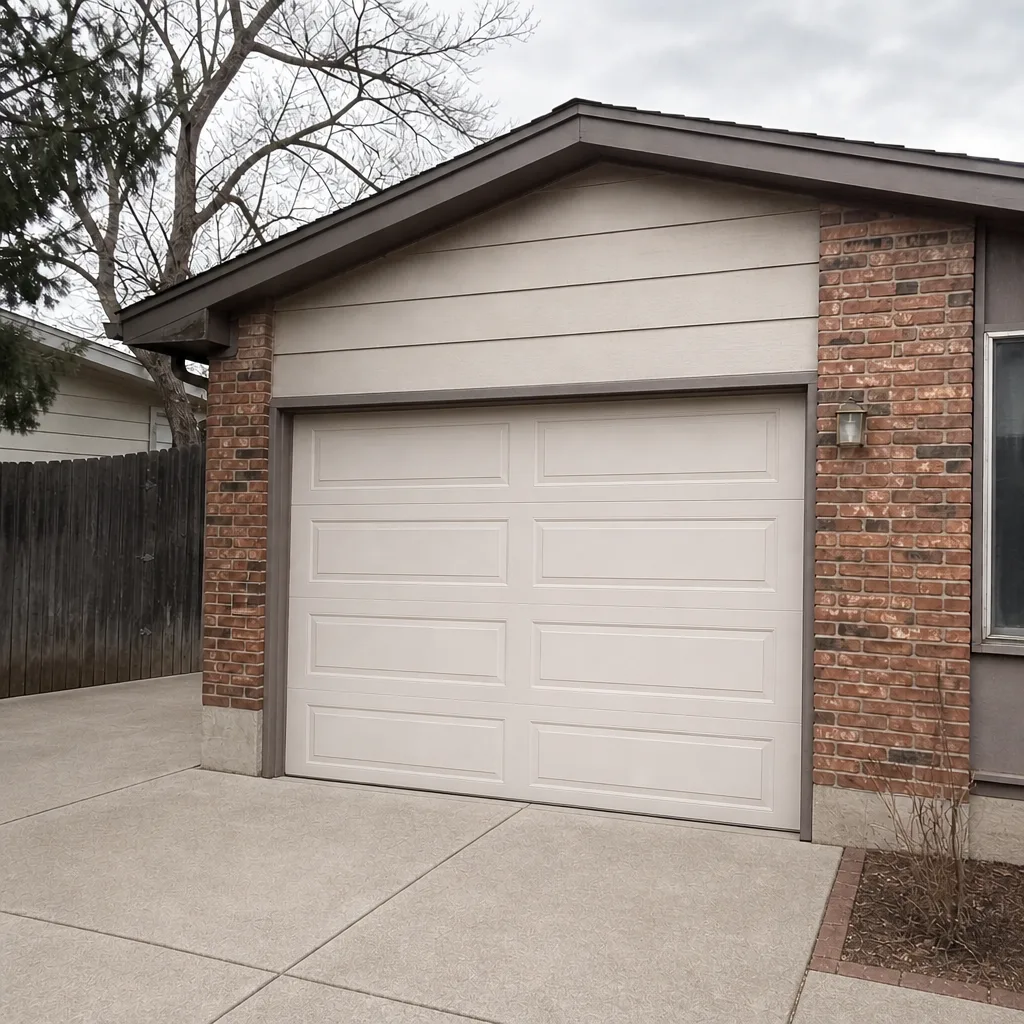 After
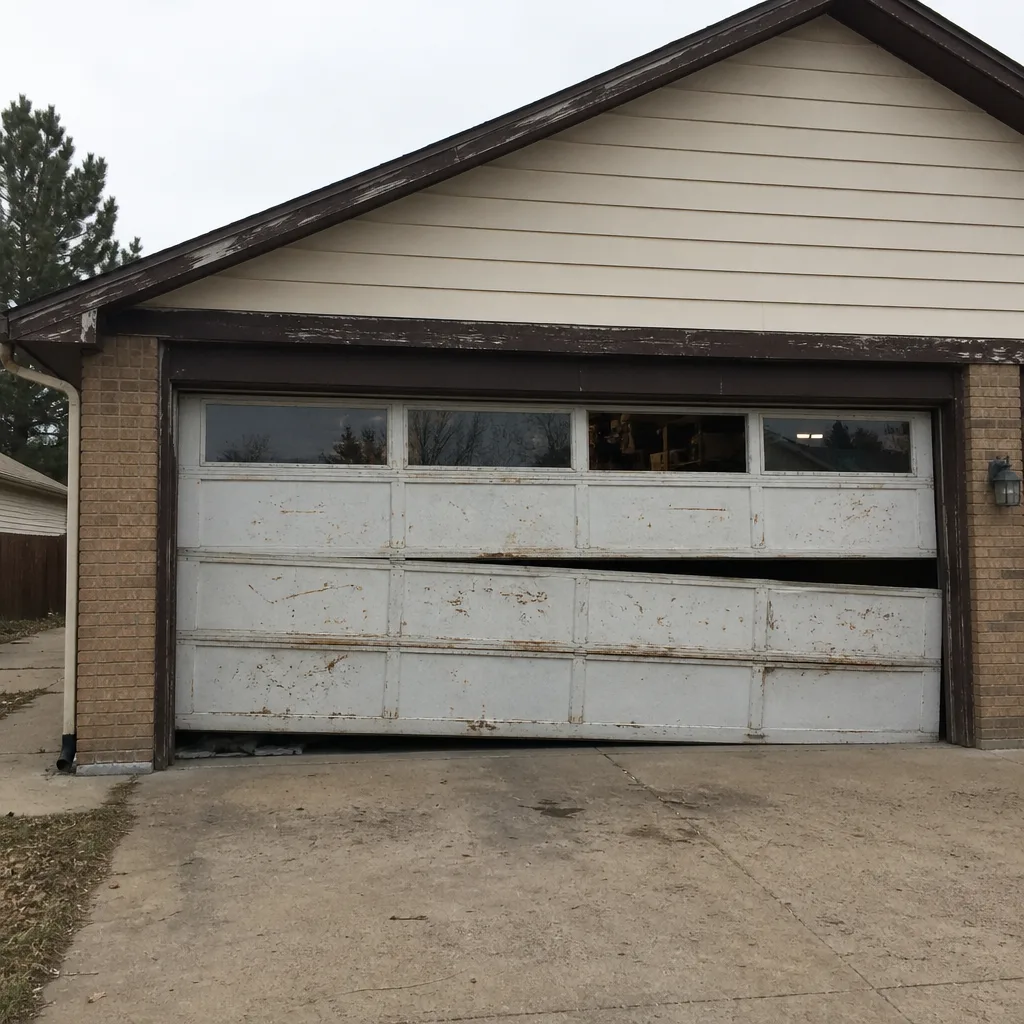 Before
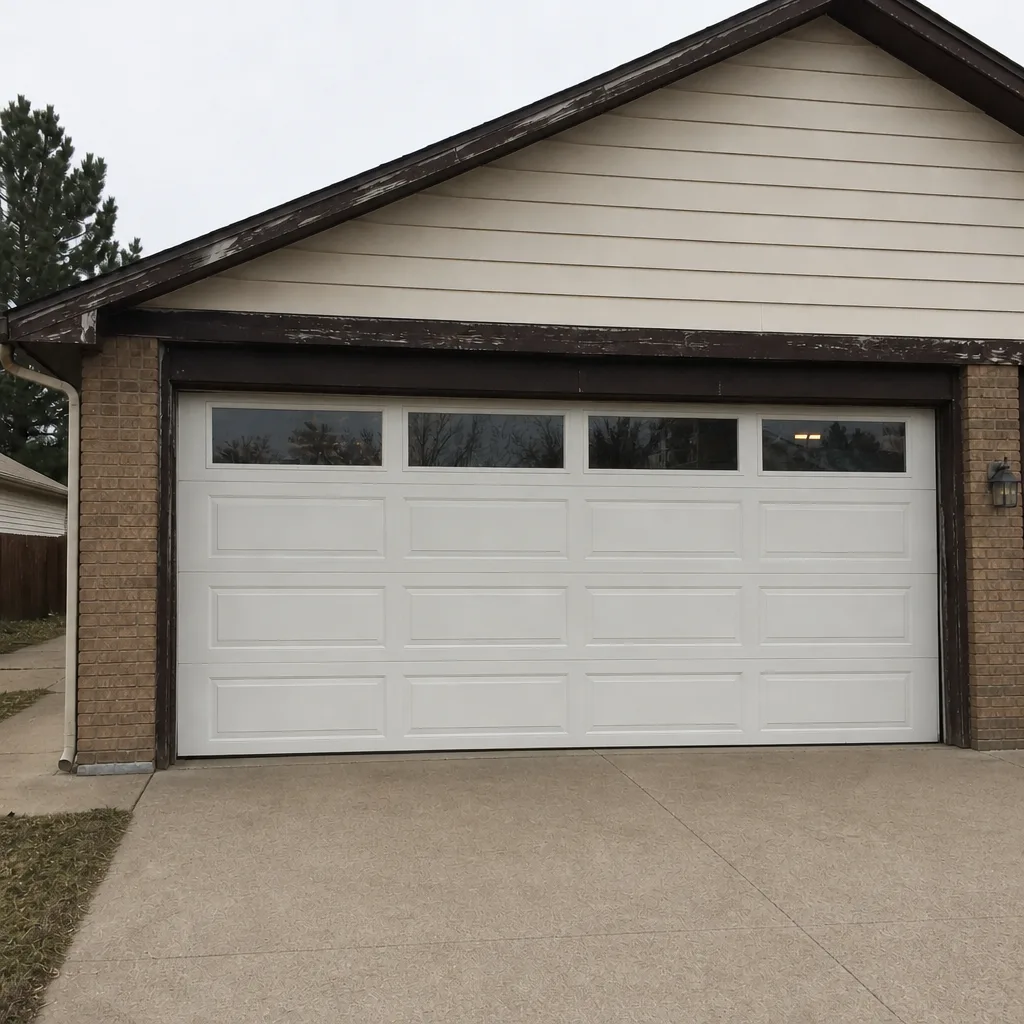 After
When to Call a Professional
Call a professional when the door moves unevenly, a cable is fraying, the springs have snapped or the door is unusually heavy, the opener reverses without obstruction, the door grinds on the way up, or the bottom gap is uneven. Any of those is a “today or tomorrow” situation. For a slow door that still moves smoothly, squeaky rollers that are otherwise fine, or a grinding that only happens with one specific brand of opener, a scheduled visit handles it comfortably. And a door that hesitates and jerks at the start is worth a look before the opener’s gear wears out. We service LiftMaster, Chamberlain, Genie, Clopay, Amarr, Wayne Dalton, Craftsman, and Raynor systems, so we don’t need to guess what you own. Arvada Garage Door Repair Co offers free estimates in Arvada – call (855) 337-1853.
Frequently Asked Questions
The most common are a door that moves slower than it used to, grinding or popping on the way up, an opener that hesitates or reverses with nothing in the way, frayed cables, uneven travel (one side faster than the other), and an uneven gap at the floor when the door is closed. Of these, uneven travel, cable fraying, and a sudden slowdown are the ones worth treating as urgent. Call (855) 337-1853 for an exact quote – estimates are free.
Spring replacement in Arvada typically runs about $180 to $340 per spring for a standard torsion or extension spring, depending on the setup and access. The price is quoted and agreed before any work starts, and the written estimate sets the final price. If you’re unsure whether a single spring or a matched pair needs replacing, we’ll tell you what’s actually failing. Call (855) 337-1853 – estimates are free.
In most cases, yes. Emergency garage door service is a core part of what we do, and a door stuck in the middle of the opening is a same-day call. We’ll tell you what we can do when we pick up the phone. Call (855) 337-1853.
No. The price is quoted and agreed before any work starts, and the written estimate sets the final price. If the diagnosis changes after we see the door, we stop and give you a new estimate before doing anything. Call (855) 337-1853 – estimates are free.
The local pros we connect you with are vetted independent professionals, and they carry the licensing and insurance their state requires. We ask the right questions before we connect you. Call (855) 337-1853 to talk through what you need.
Yes. A slowdown is usually the first visible sign that a spring has started to lose tension, and a weakened spring can fail under load with no further warning. Fixing it as a scheduled visit is cheaper and safer than fixing it after a failure. Call (855) 337-1853 for a free estimate.
The Bottom Line
Most garage door failures leave warning signs weeks before they happen. The trick is knowing which ones to take seriously. A steady squeak is usually maintenance. A sudden slowdown, uneven travel, a fraying cable, a reversing opener, or a floor gap that no longer sits level is a signal that something in the door’s balance or load path is changing. Arvada’s thermal swings and Front Range clay make those signals show up faster than homeowners expect. If you’ve noticed any of them, a garage door technician can look at the door, tell you which signals matter, and quote a fix before anyone touches a tool. From a single broken spring to a full new door installation, we handle the whole job. If you’d like a free estimate from Arvada Garage Door Repair Co, call (855) 337-1853. Our technicians have up to 15 years of experience.
Written by the team at Arvada Garage Door Repair Co.